
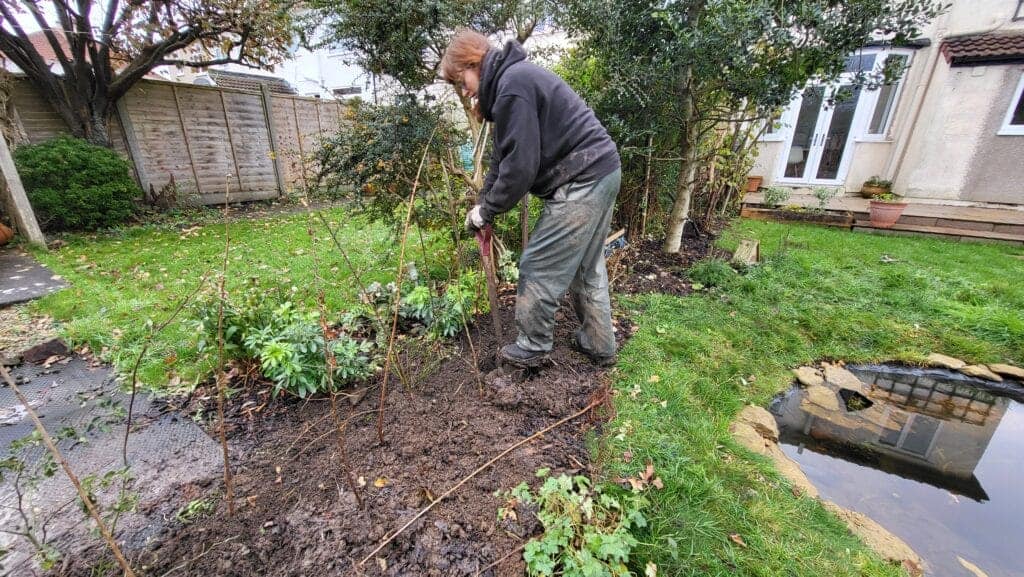
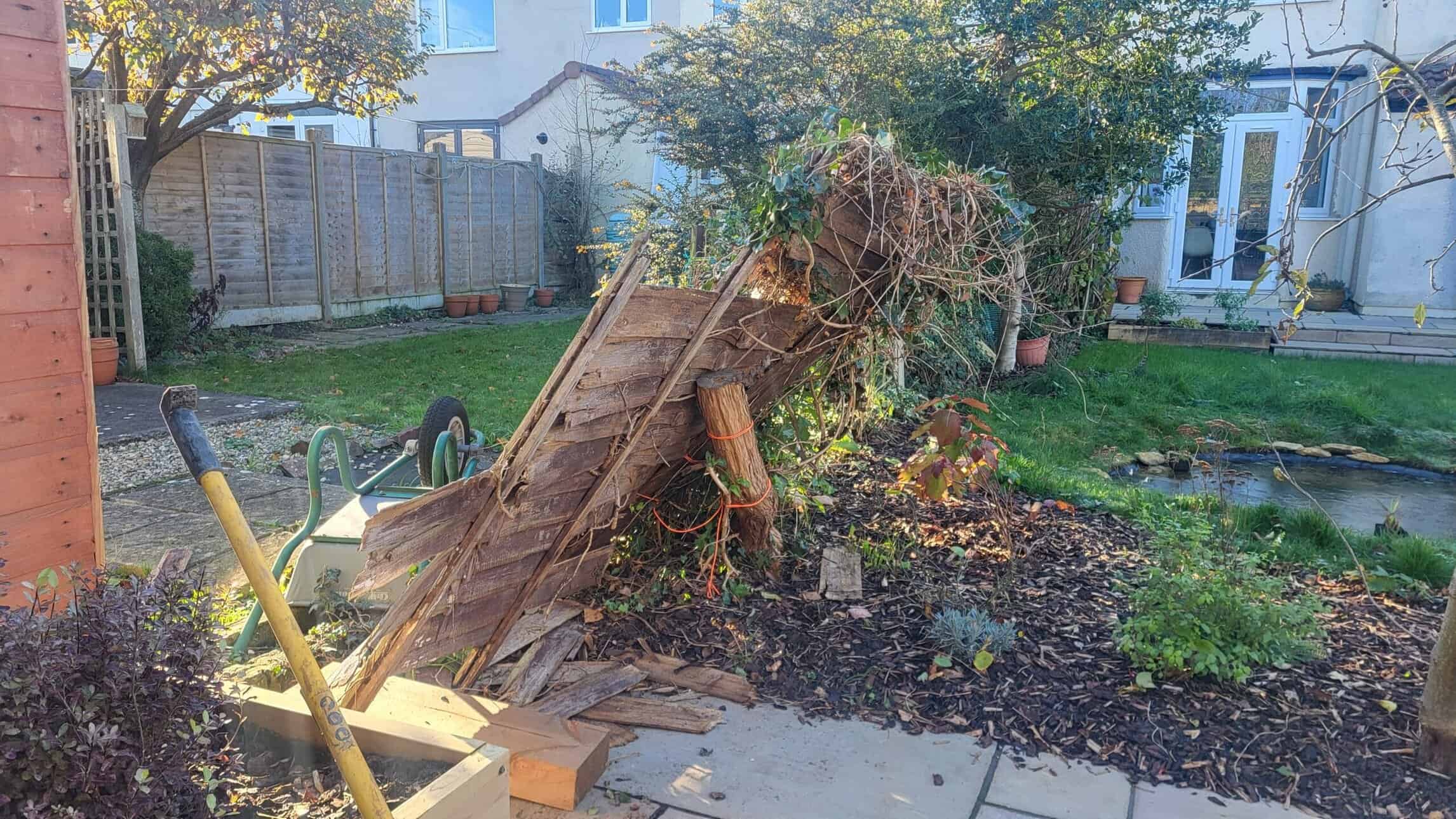
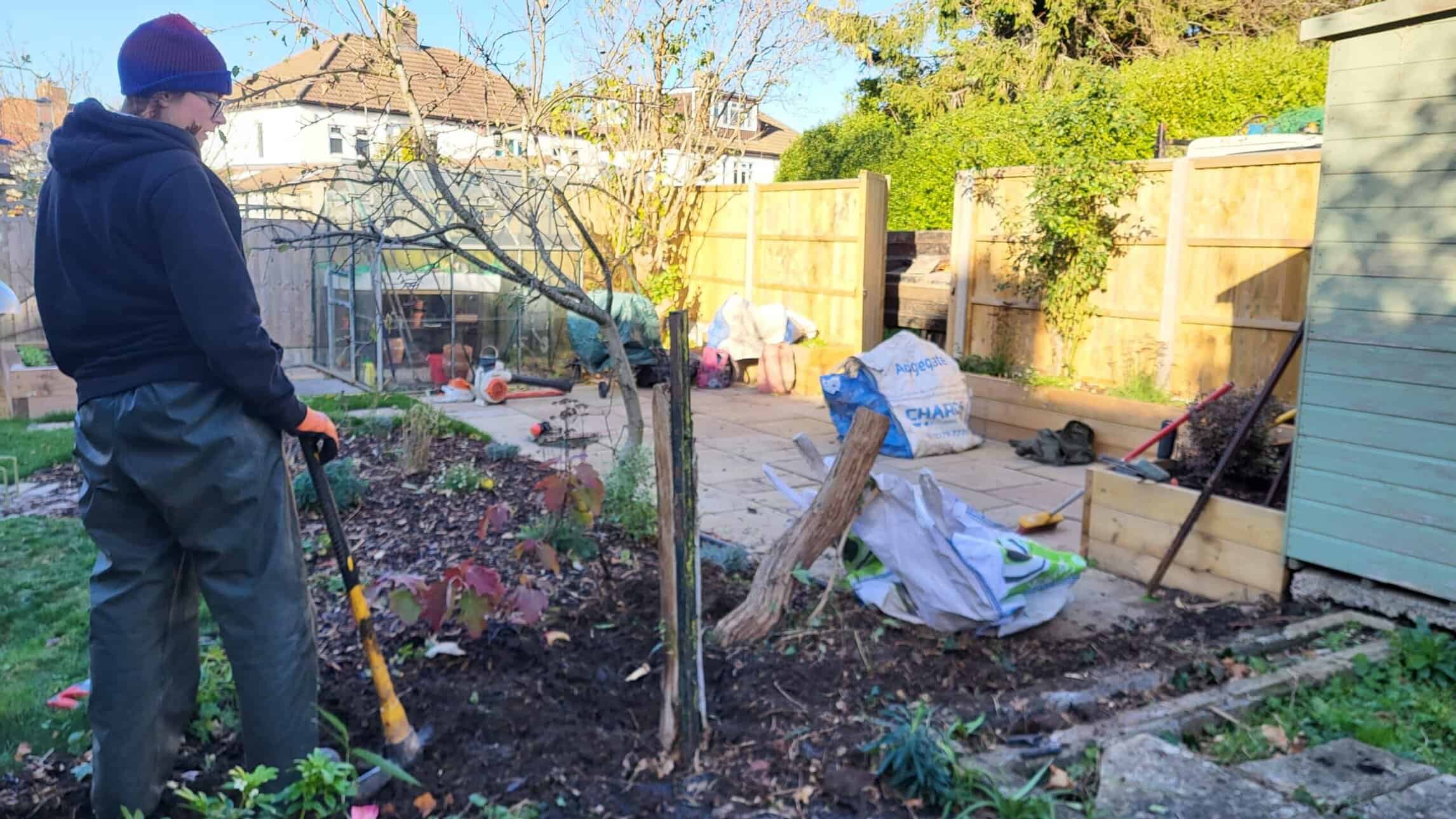
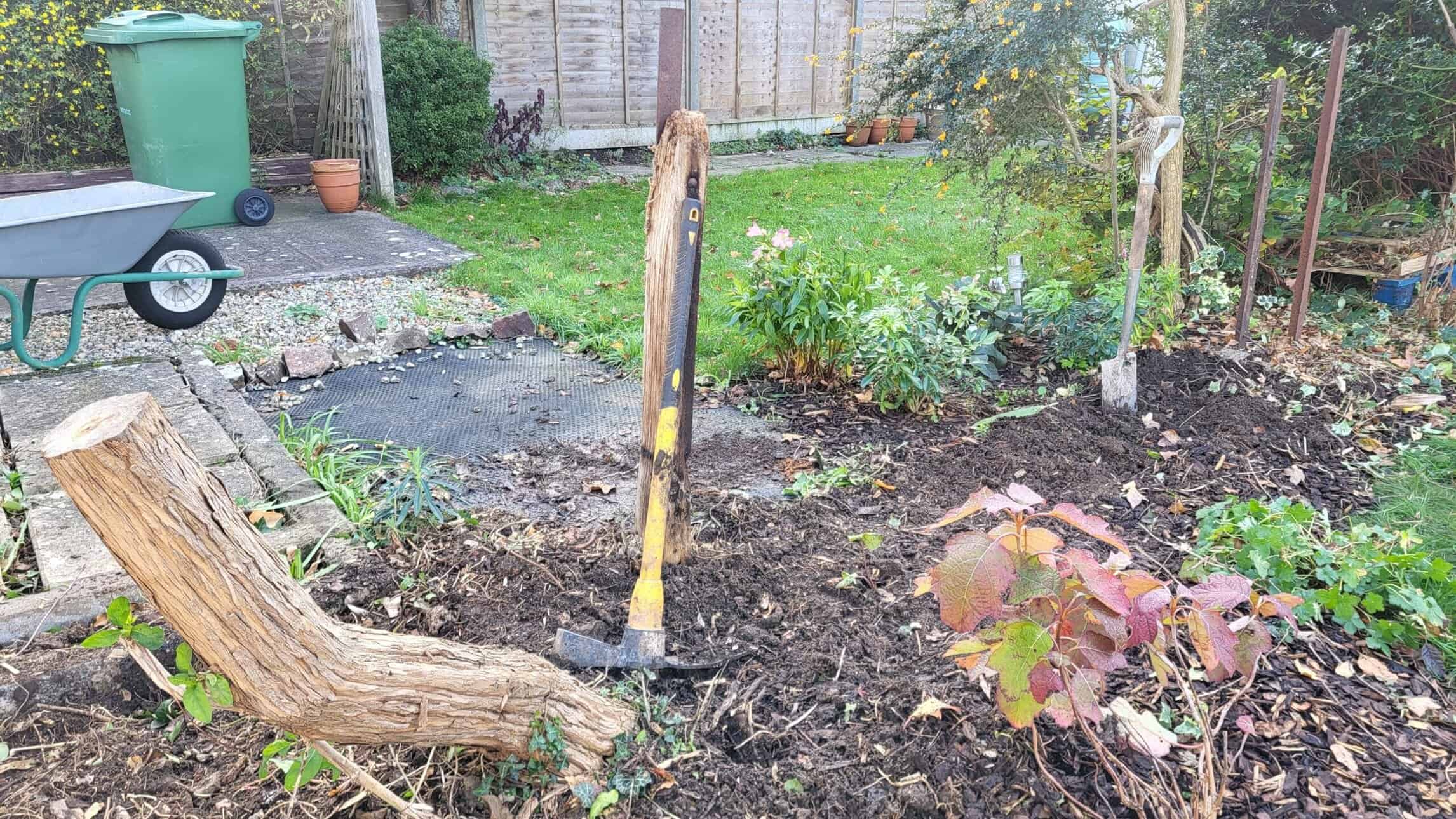
As you can see, the neighbouring boundary line was almost inexistent, with a very old, broken wooden fence in place, that pretty much pulled away in our hands. We quickly got to work removing the fence and debris, and began using a mattock to break up the soil and to remove some bamboo, bindweed and ivy roots that was growing along this line.
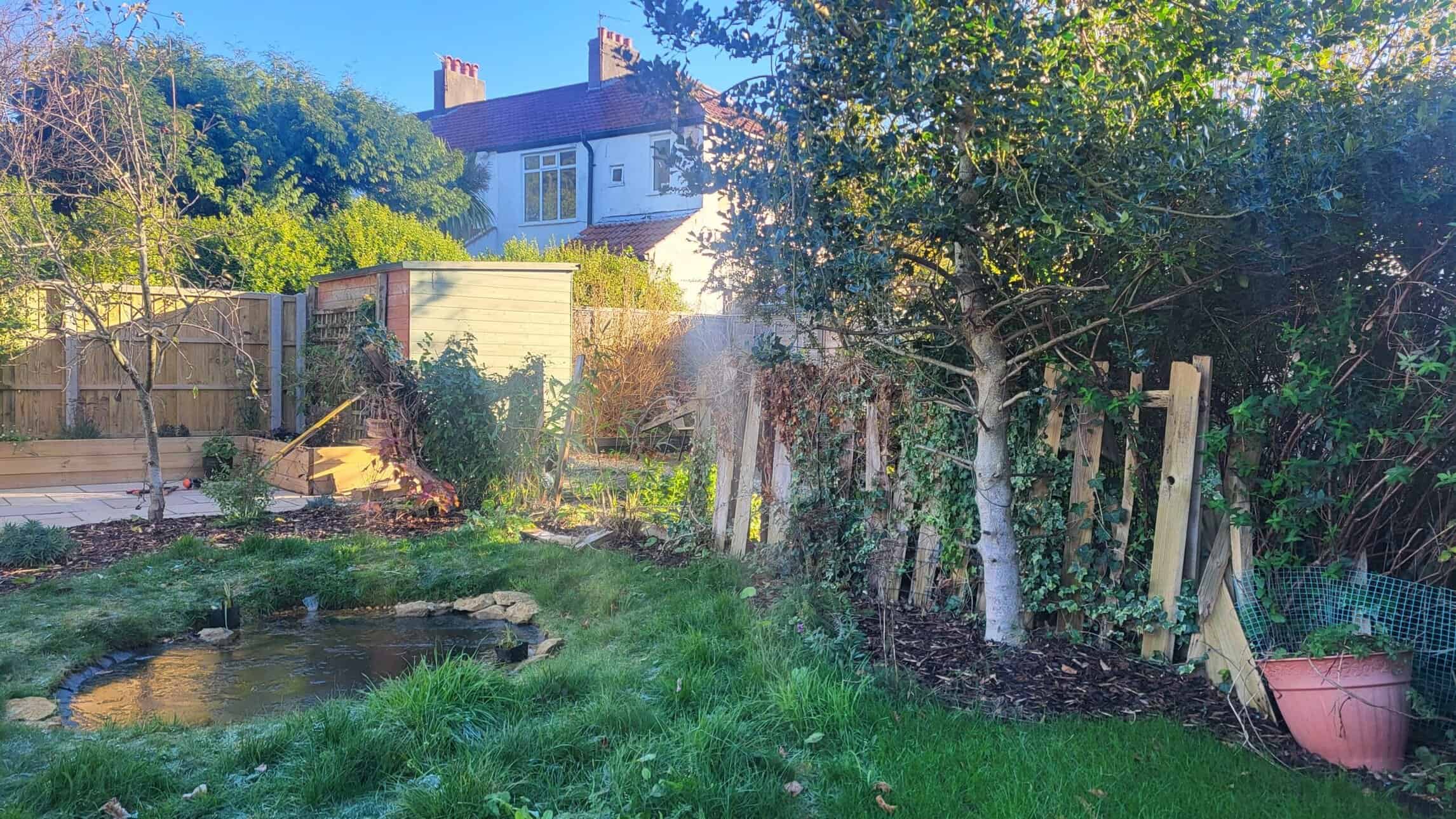
It was the coldest day of the year so far, with temperatures starting at zero degrees that morning. The pond was frozen over all day. The meadow turf that we laid, has settled in well around the pond, and the plants are mostly dormant in their borders at the moment, waiting for the spring sun to return.
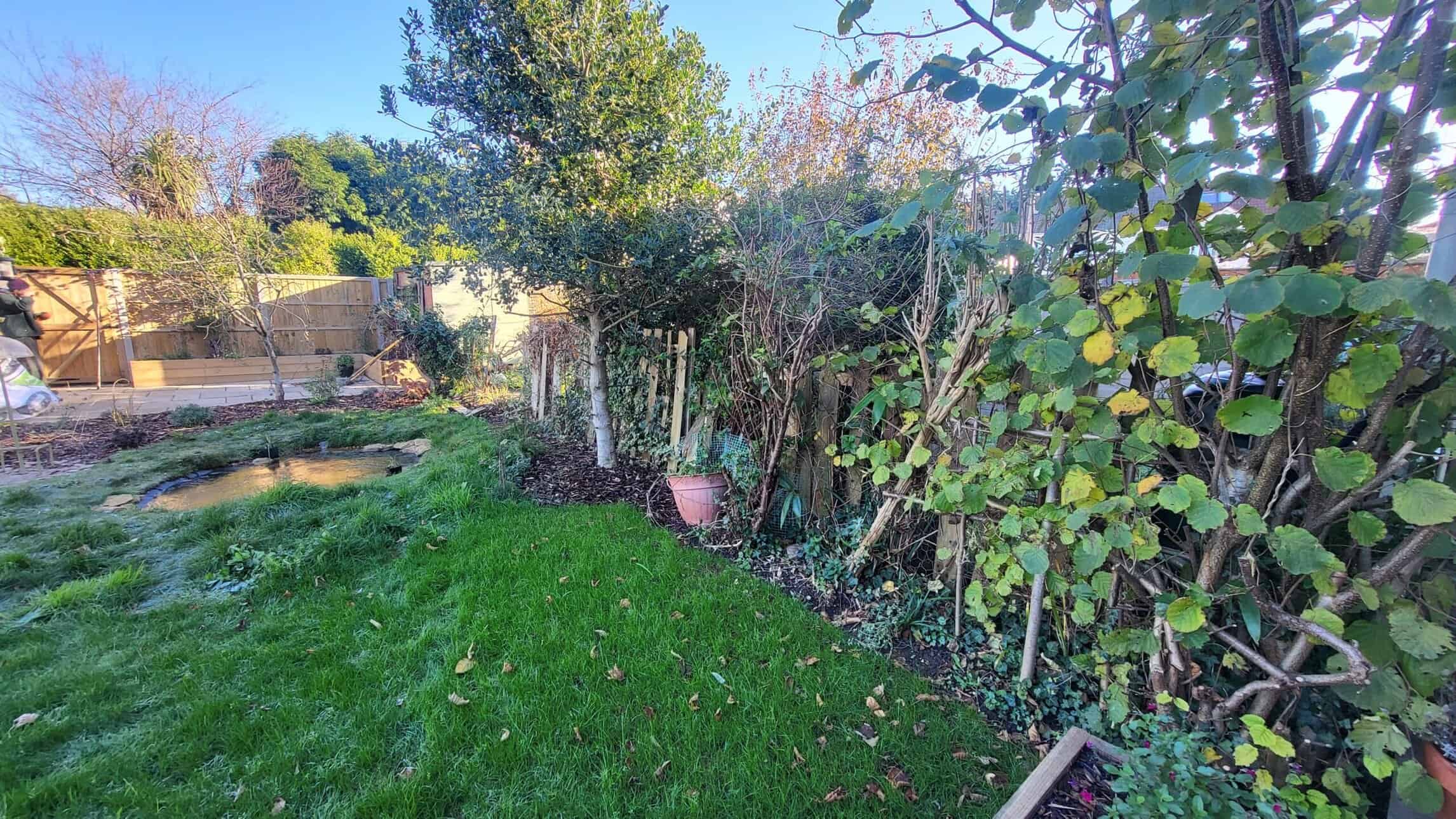
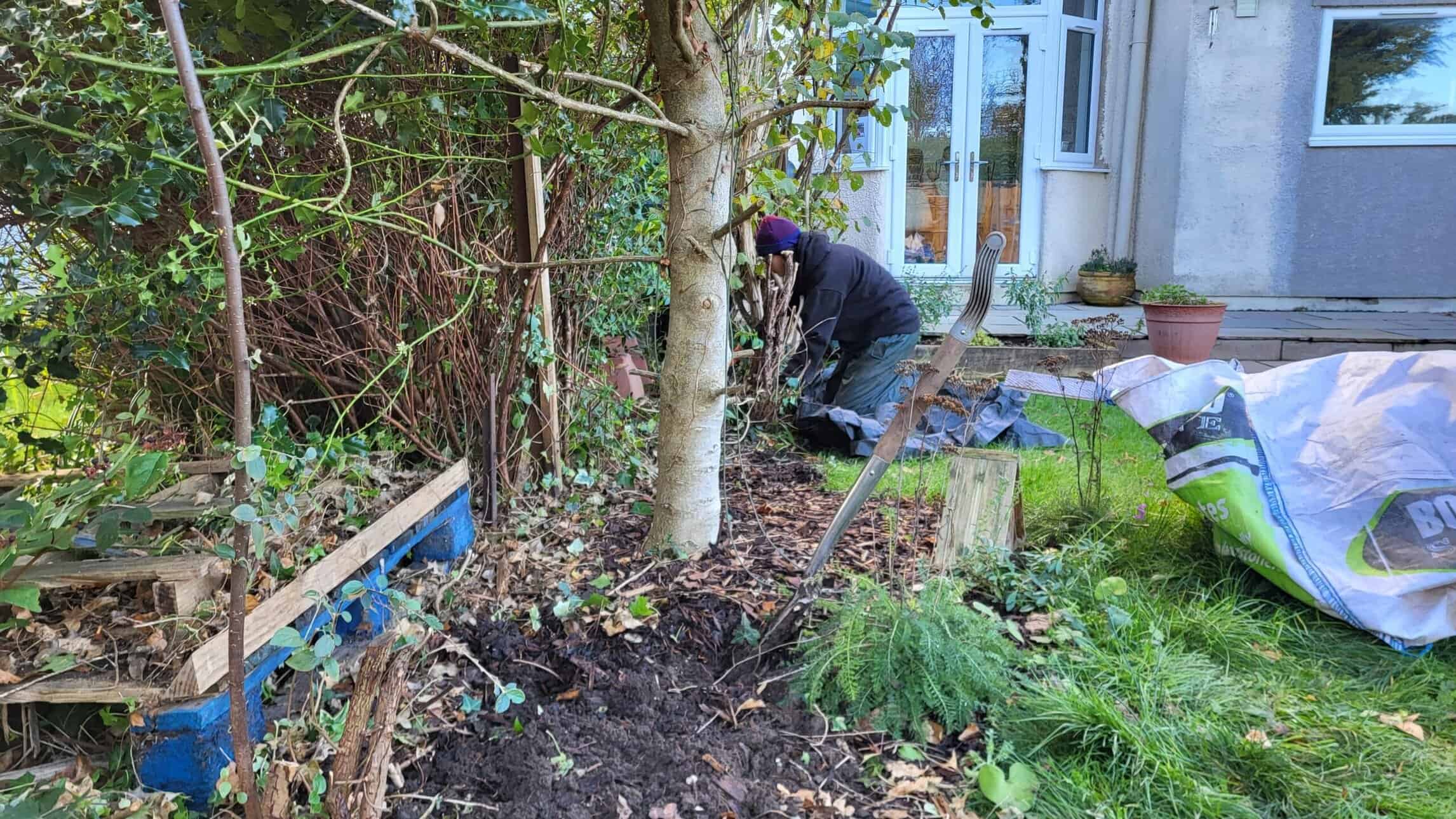
We continued to remove pieces of the wooden fence, along the border line between the holly tree and hazel tree. Both are being kept as part of the hedge, as both are native to the UK.
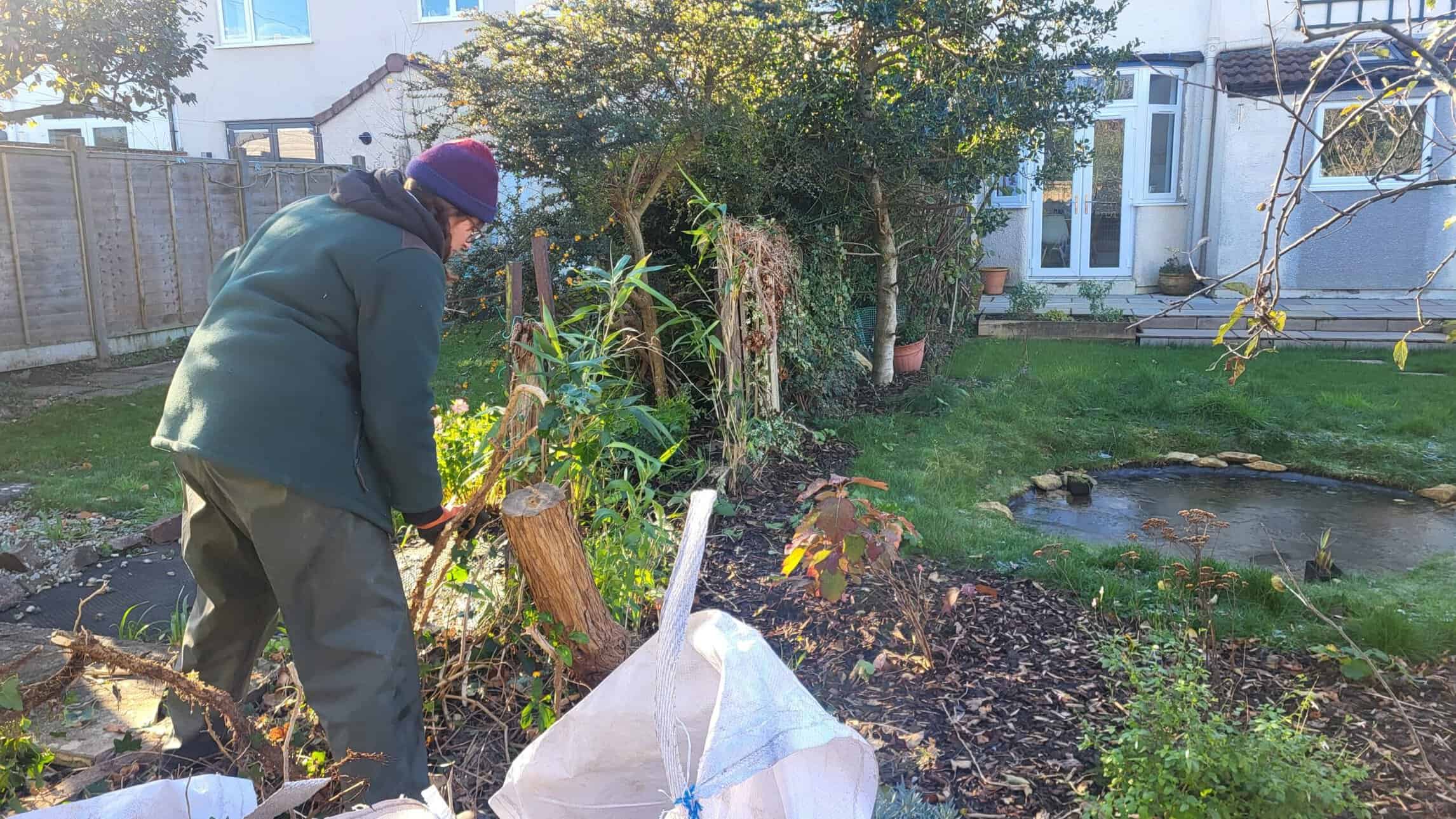
A new timber fence panel will be installed between the shed on the right, and the post in the middle of this picture. This post will be removed, and will be replaced with a concrete post for longevity, with a 6ft overlap panel.
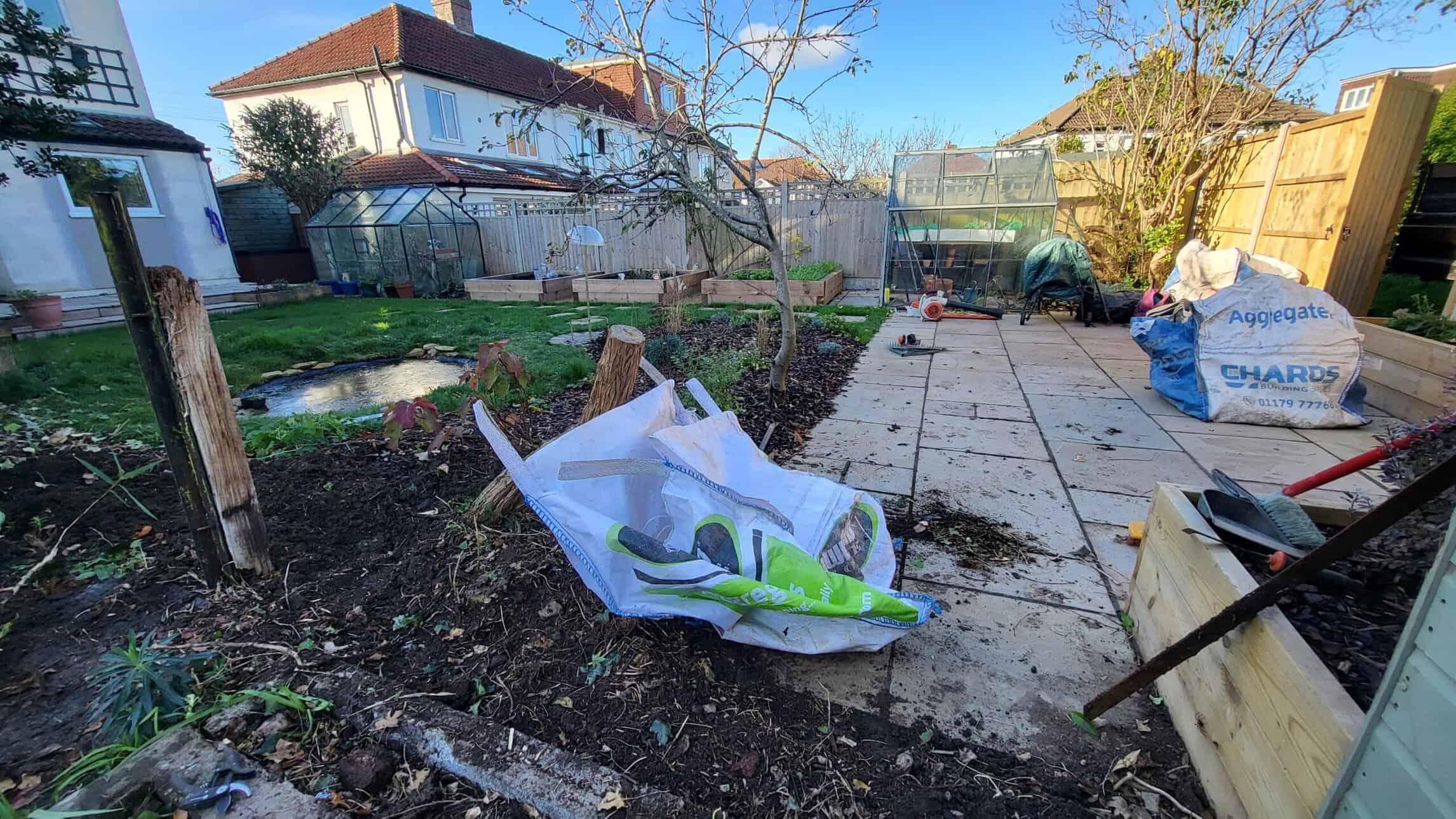
Within a few hours we had prepared the ground so that we easily plant the whips when they arrive from our supplier. The hedging is blackthorn based, including native species such as, hazel, dogwood, wild cherry, field maple, and hawthorn.
When the bare root whips arrive, a key factor to remember is to put them in water immediately – do not keep them in water, but keep them moist. As they are young and small, they can dry out very quickly. Moisture stress can result in failure of roots establishing; which in turn creates vulnerability to pests and disease, difficulty absorbing nutrients, wilting and death.
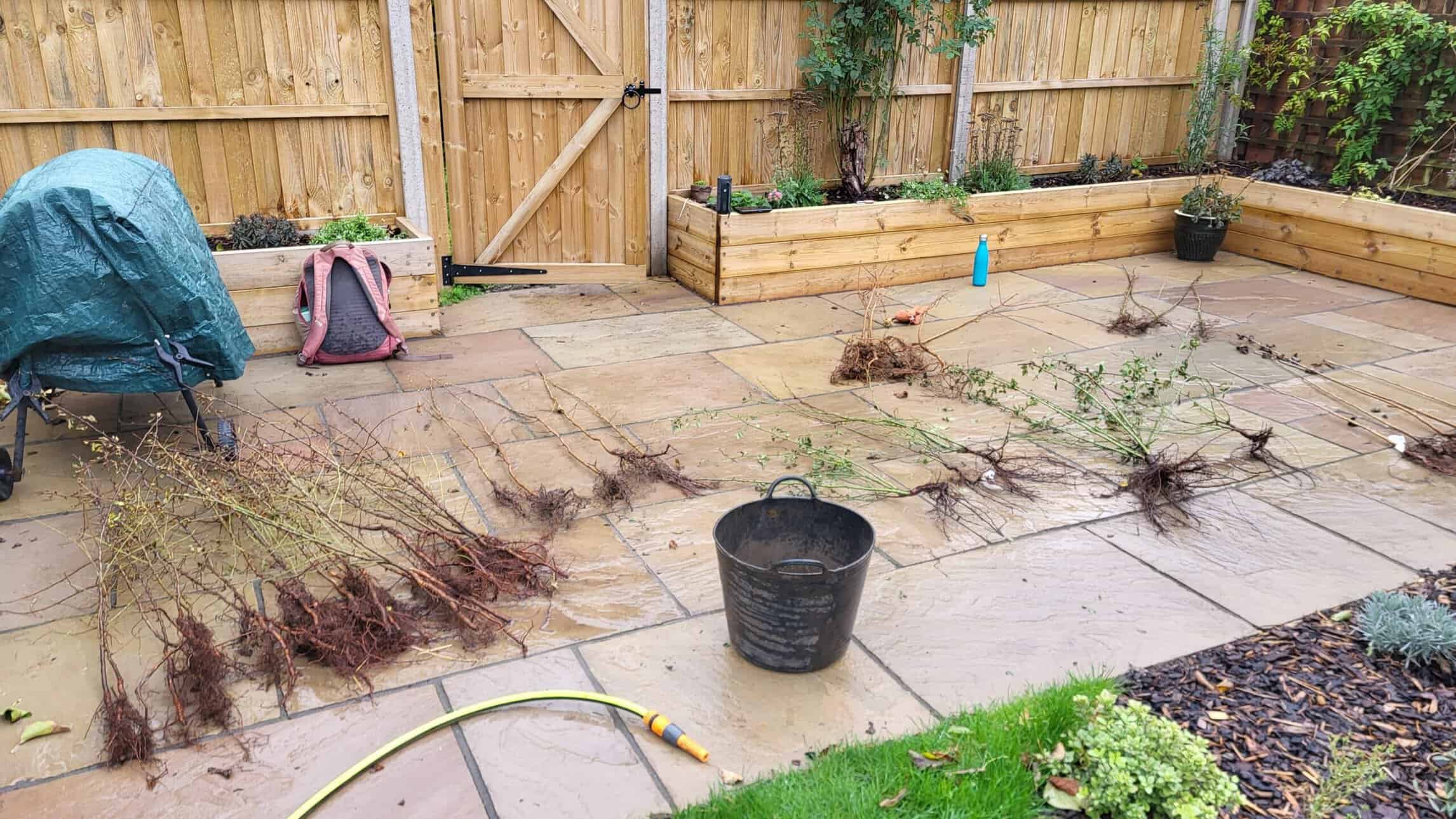
Whips should be stored in a frost-free location like a shed or garage during the winter, plant them as soon as you can, and remember to keep them moist. We laid out the different species, and mixed them up as we planted.

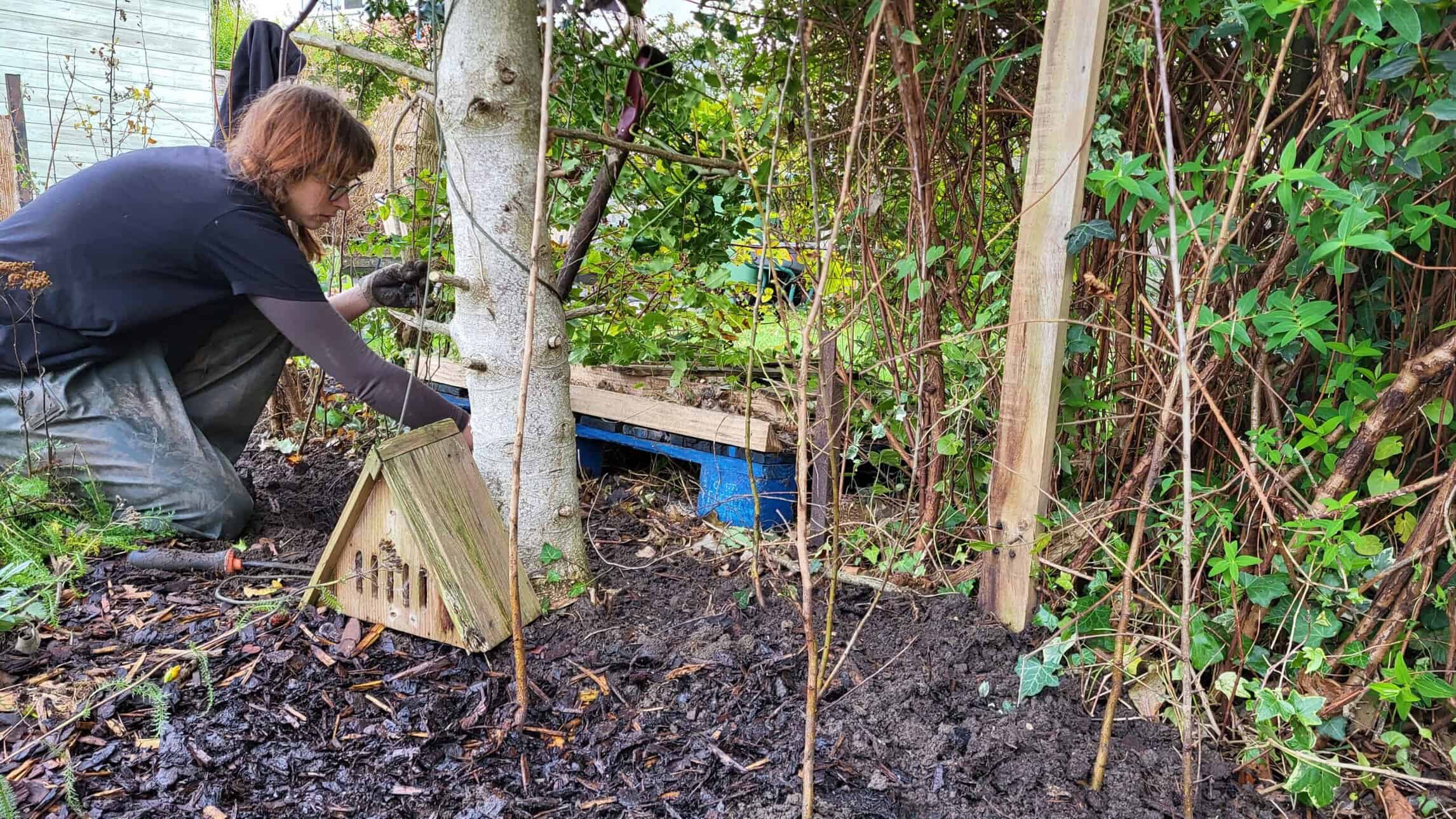
They might look small at the moment but in a couple of years, this will be a thick, beautiful hedge, filled with wildlife. We planted x7 per metre which will create a good thickness as the different plants intertwine together.
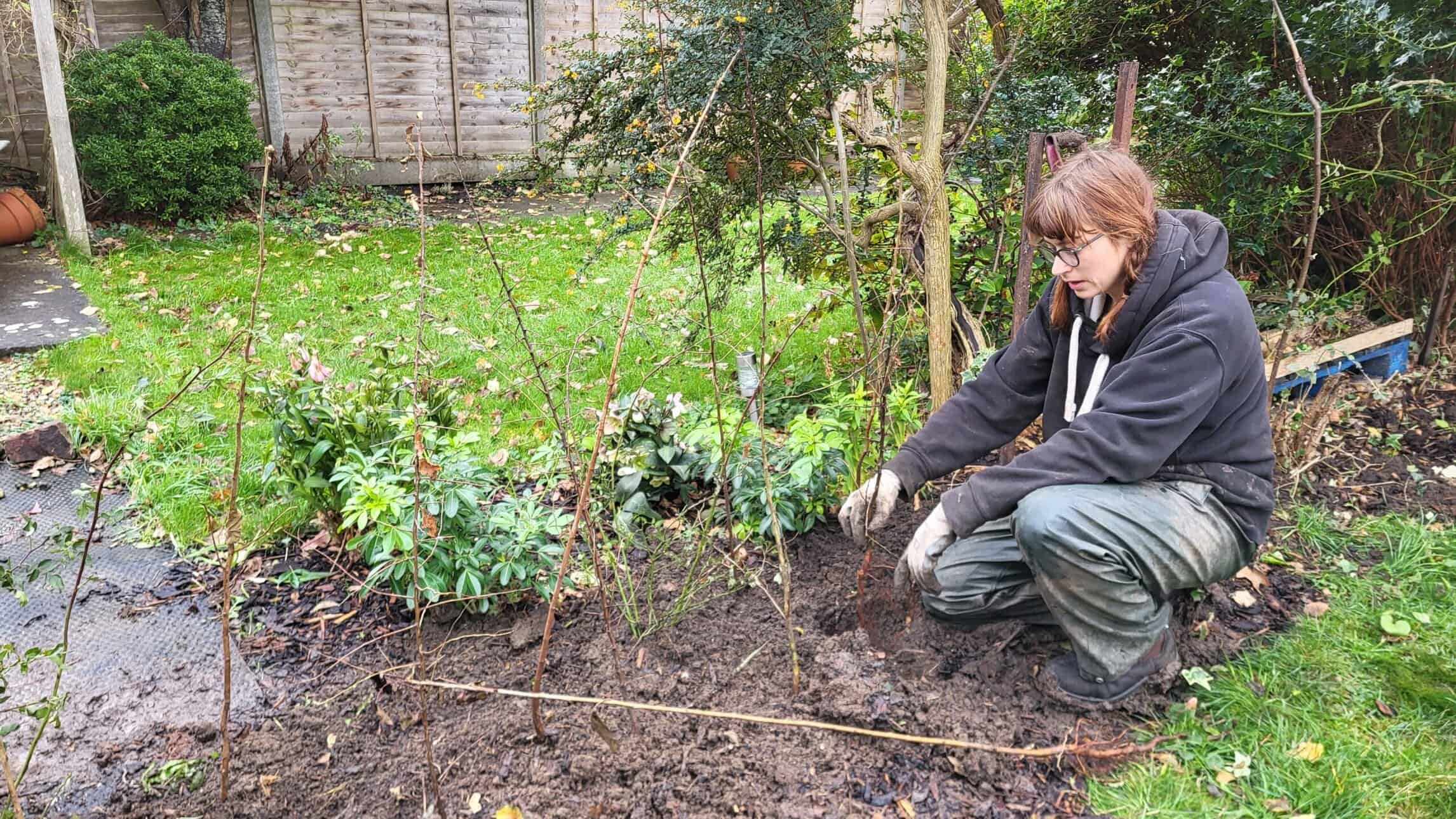
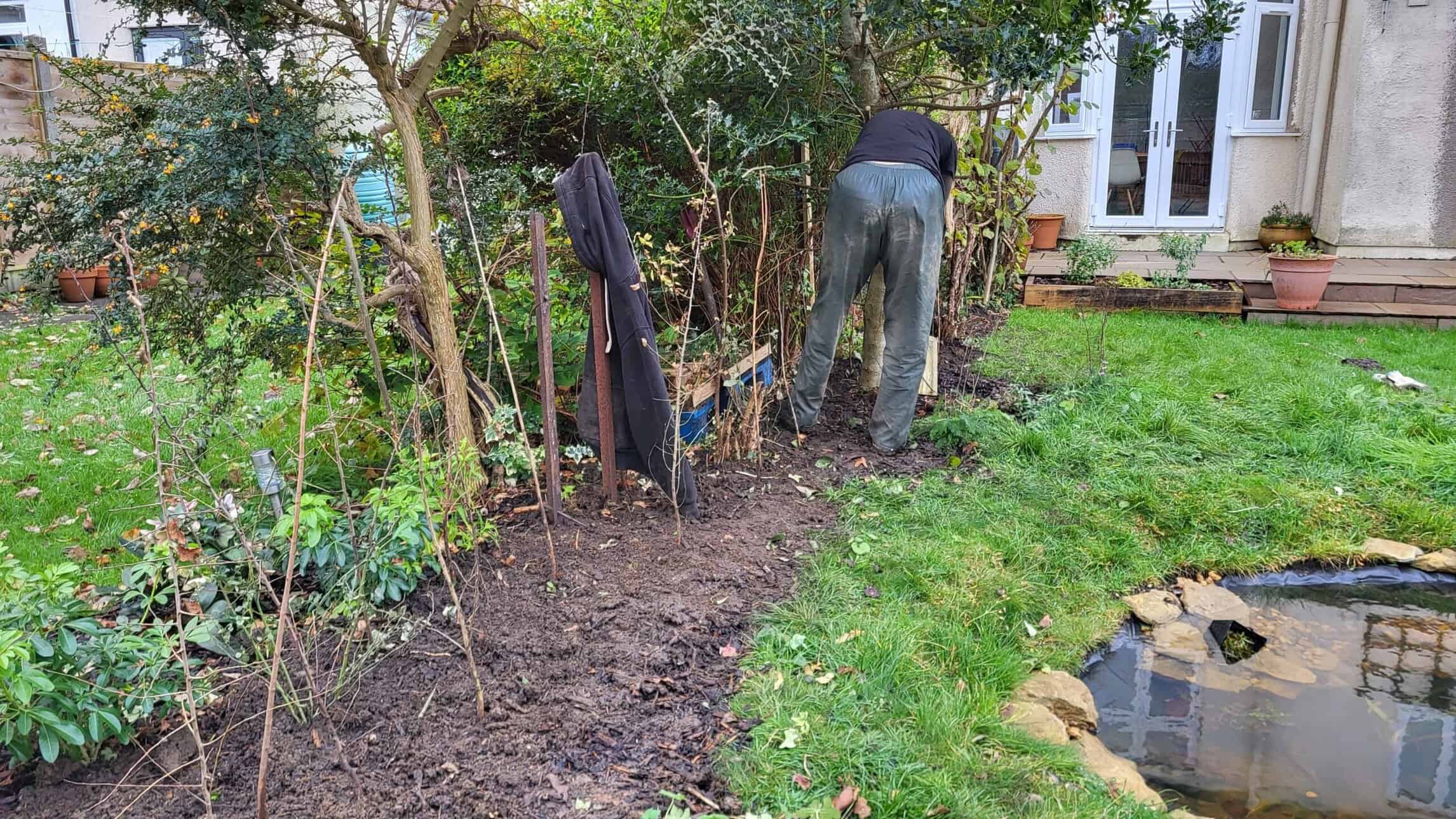
Many people assume hedges require lots of upkeep, but native varieties are surprisingly undemanding. Once established, they typically only need trimming every two to three years, keeping them healthy while allowing wildlife to benefit from flowers and berries.
Beyond their ecological value, native hedges offer practical benefits too: they create privacy, reduce noise, filter pollution, and provide seasonal interest throughout the year.
If you would like to see the photos of this landscaping project during the summertime, click here.