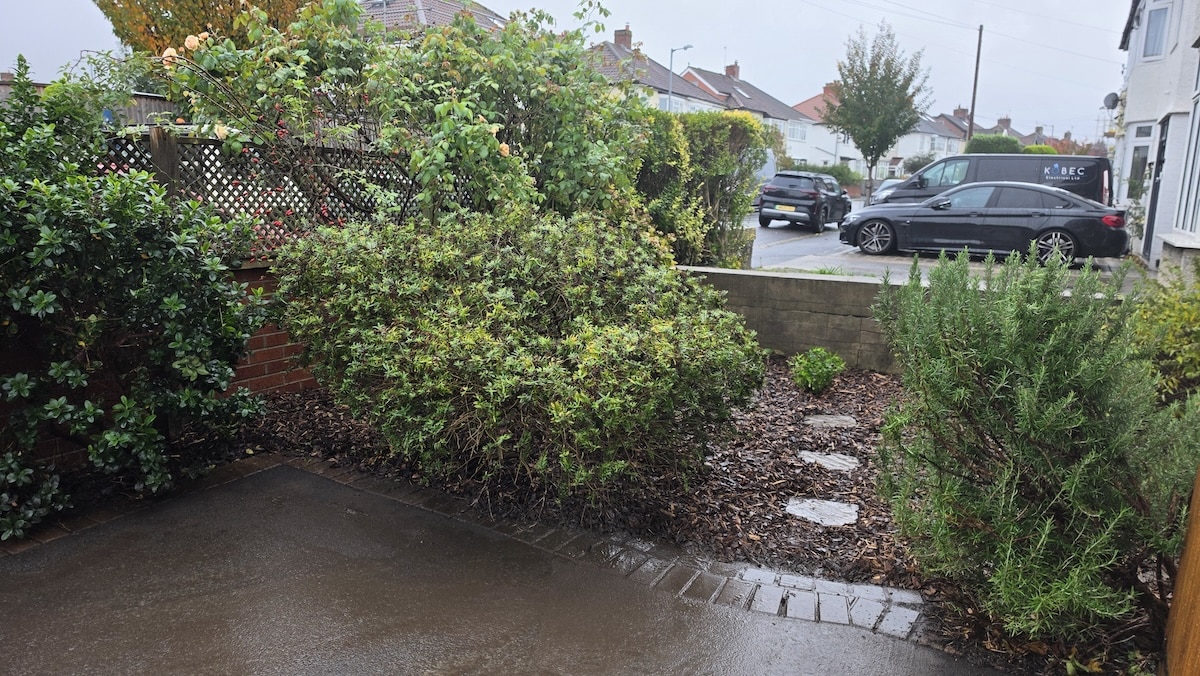

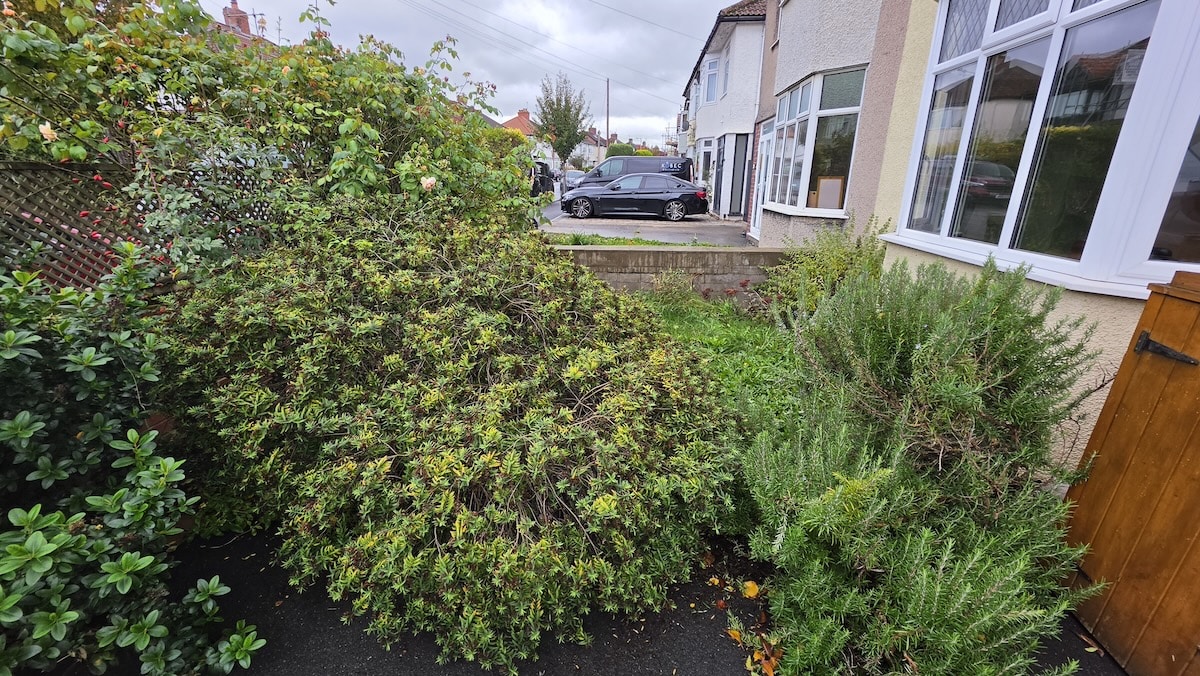
We began by cutting back a rather large Hebe, that was taking over the space, along with the Rosemary, and tidied up the climbing Rose. Once all the green waste was in our customer’s green bin, we began to scalp the lawn. It poured with rain pretty much continuously during our morning there, and we were covered in mud by the end of it. But it was good to see the transformation take place. Just being able to walk into the front garden, after it previously being so overgrown, was a result.
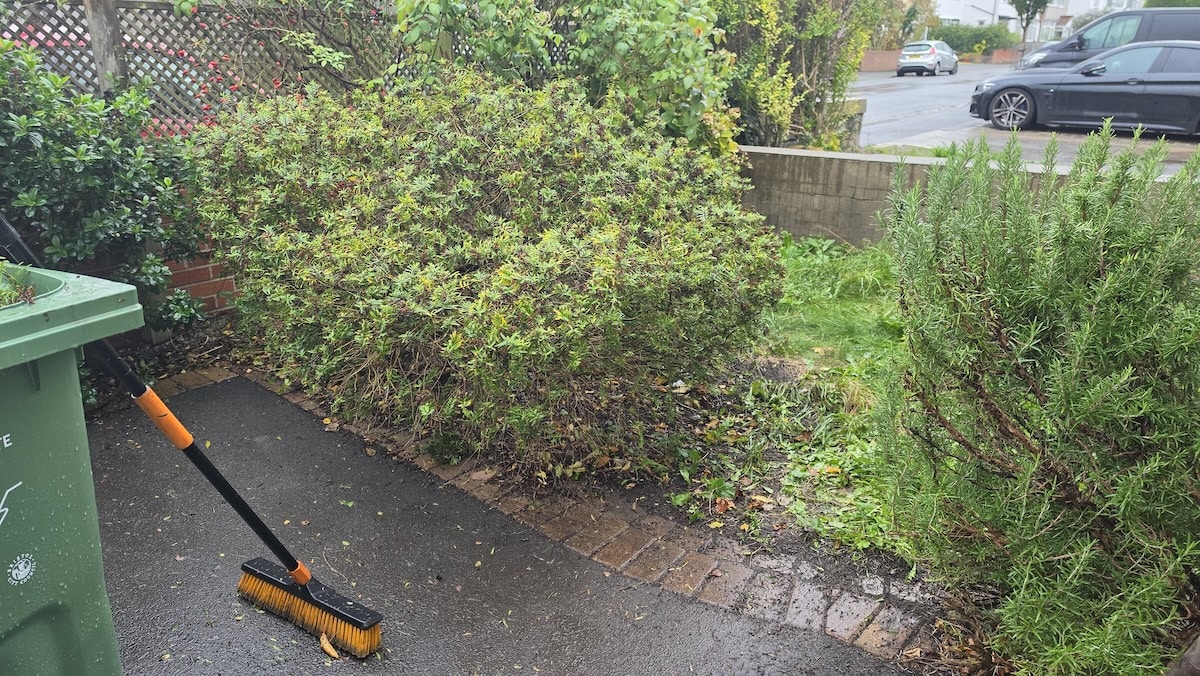
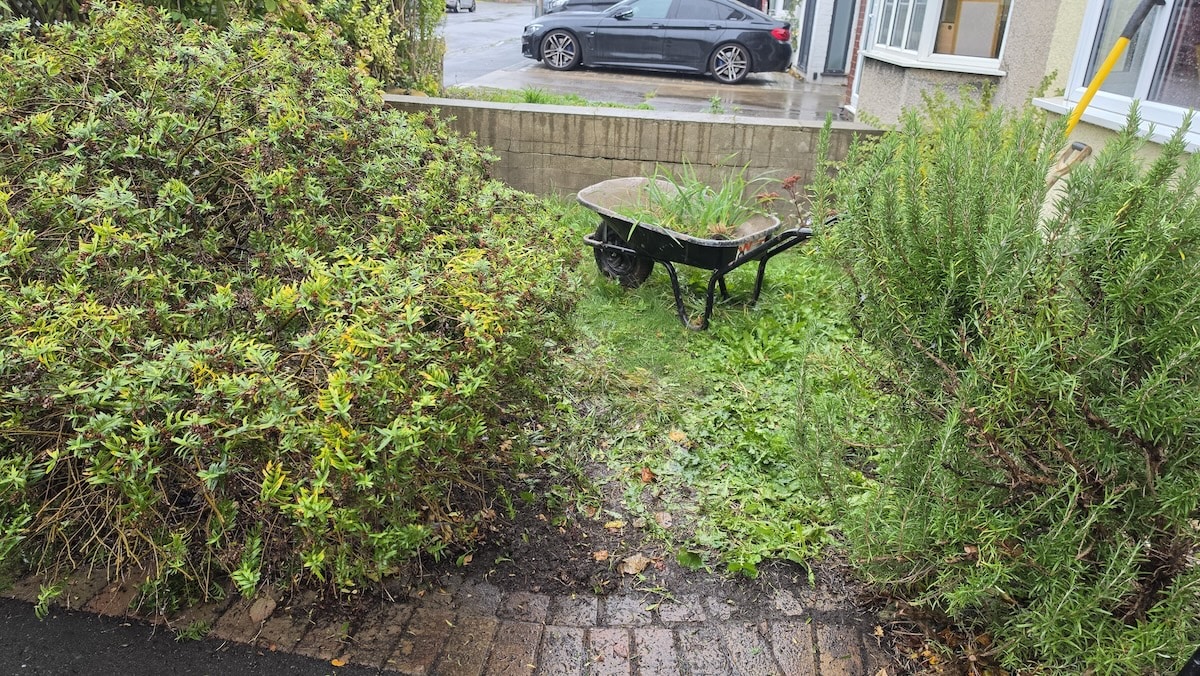
During the scalping of the lawn, we dug up perennial weeds and tried to remove as much of the roots as possible. We removed a dumpy bag full of lawn scalpings, and brought in a bulk bag of bark mulch at the same time.
Whilst I went off to select a few plants, Joe dug a few simple, stepping stones into the space, to make it easier to get through the border for garden maintenance. We added a few Achillea, which are fantastic drought tolerant plants, along with Penstemon, which I have noted during the past few, hot summers have done very well in Bristol gardens. Plus, Solidago ‘Goldkind,’ otherwise known as Golden Rod, which is a woody, perennial plant and is also drought tolerant, once established.
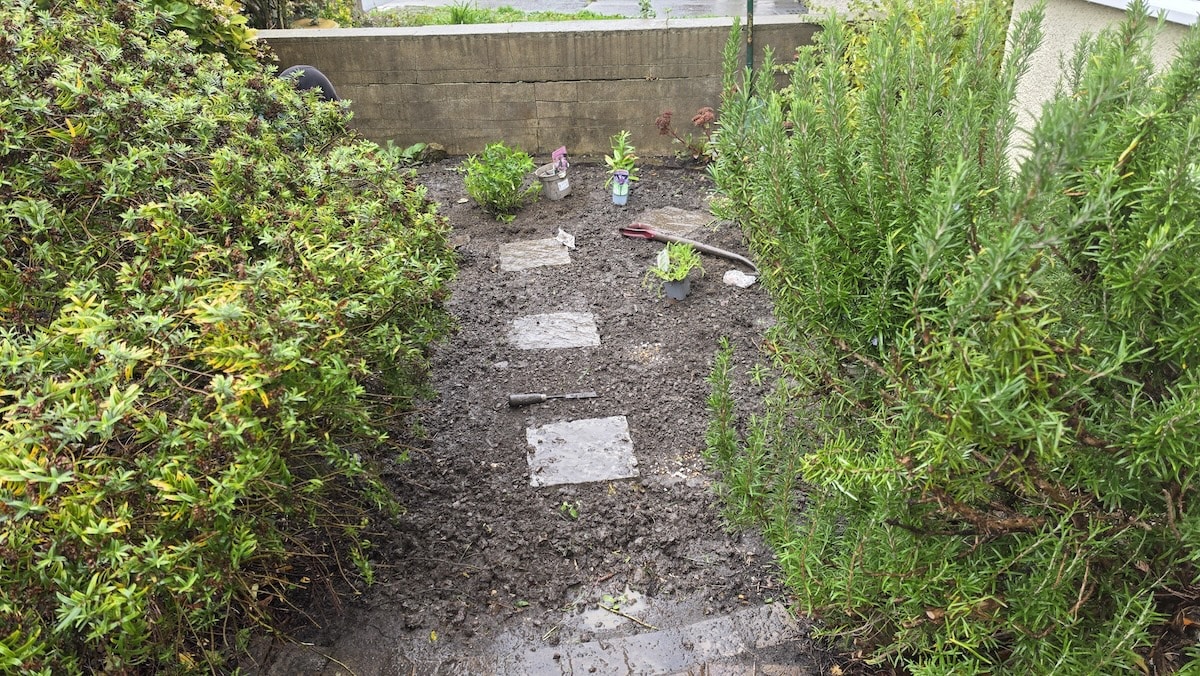
As these plants will have the winter to soak up lots of water, they should be prepared by the time the heat reaches us again next year. We are planning on also adding a Salvia ‘Hotlips,’ to the back wall, by the Hydrangea in the springtime.
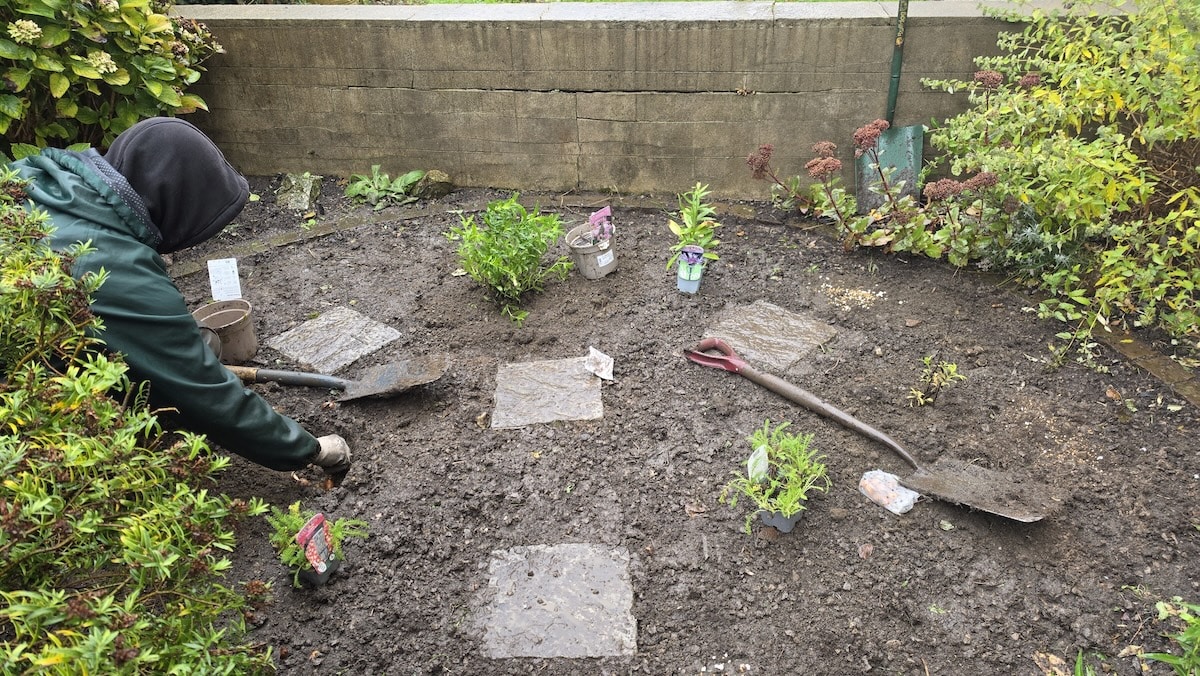
Along with the plants, are customer had bought some bulbs, which we planted in clumps around the area, depending on height – with the lowest growing along the edge of the stepping stones. These will look lovely when they come up in the spring.
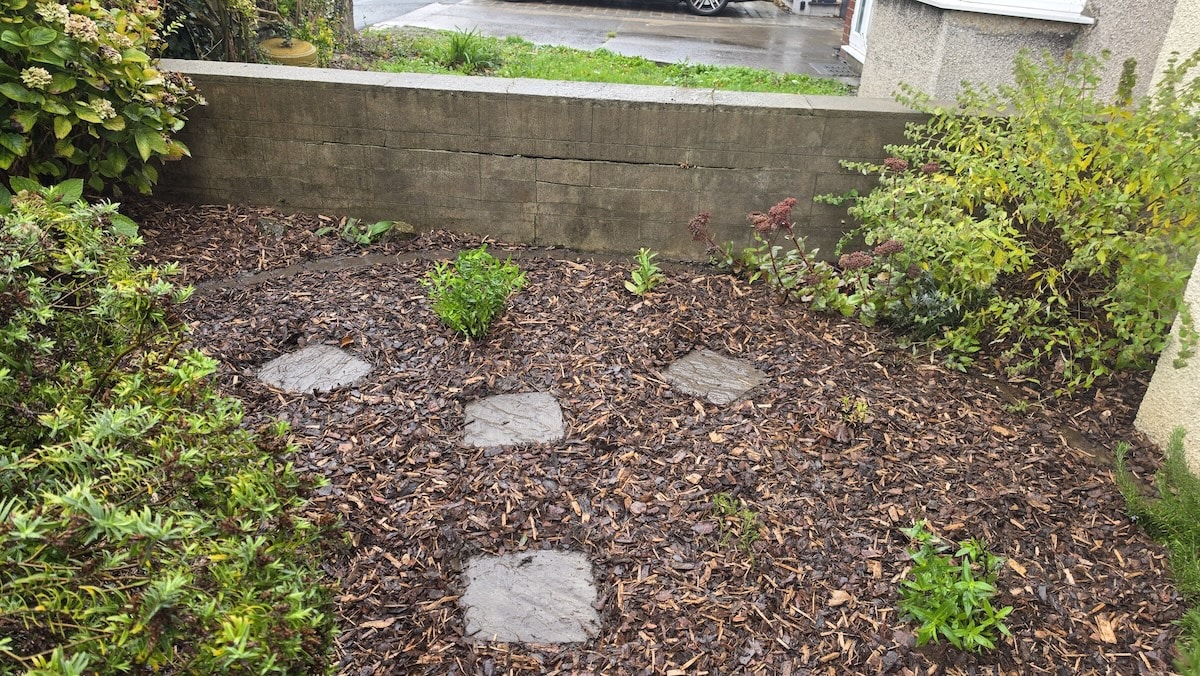
The last step of the project was to add a thick layer of mulch to the garden. This will help to suppress the weeds, will retain moisture in the soil during periods of prolonged heat, helps to break down the soil and improve it as it breaks down, and gives a great top dressing appearance. This was a good morning’s work.