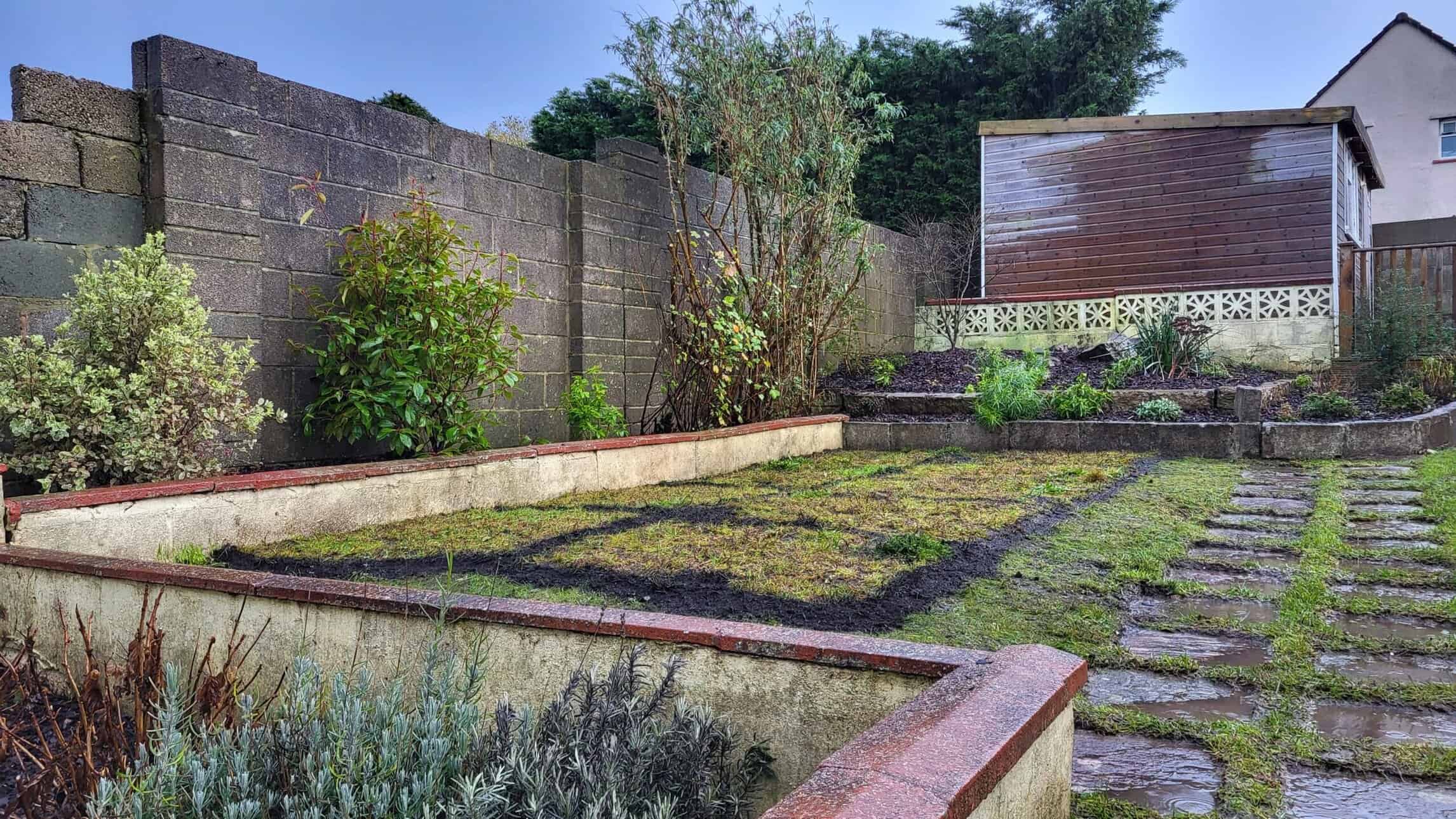

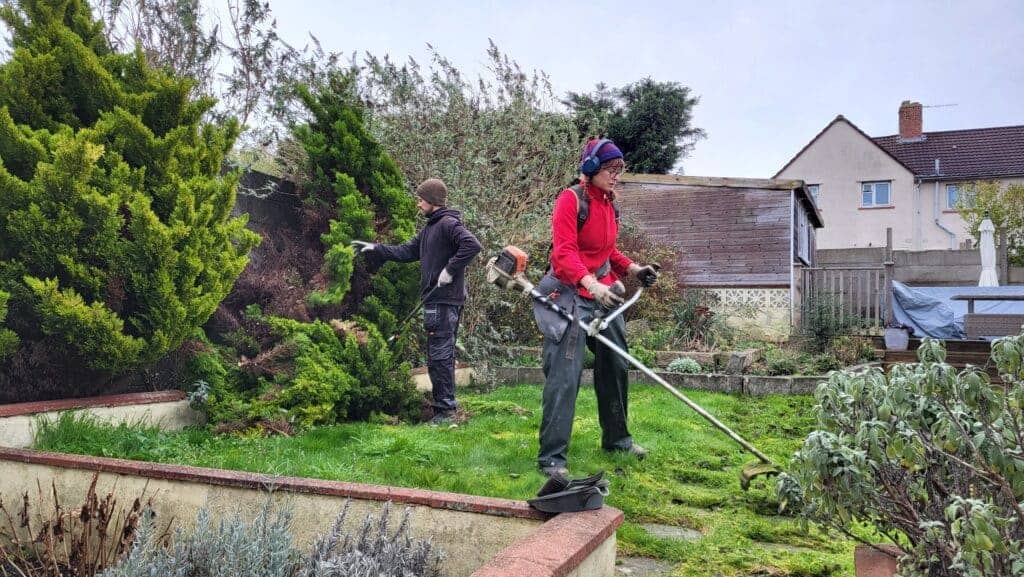
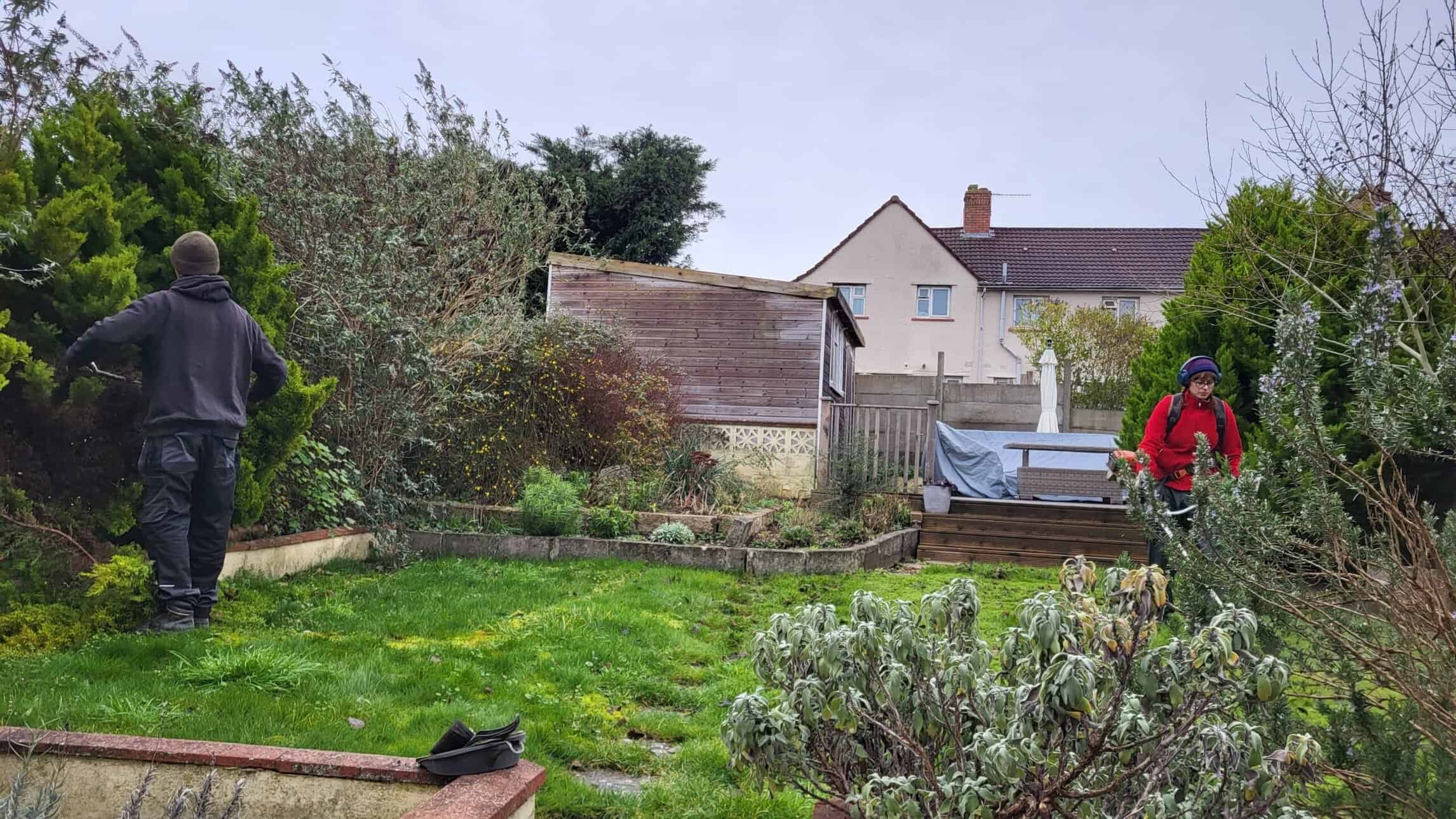
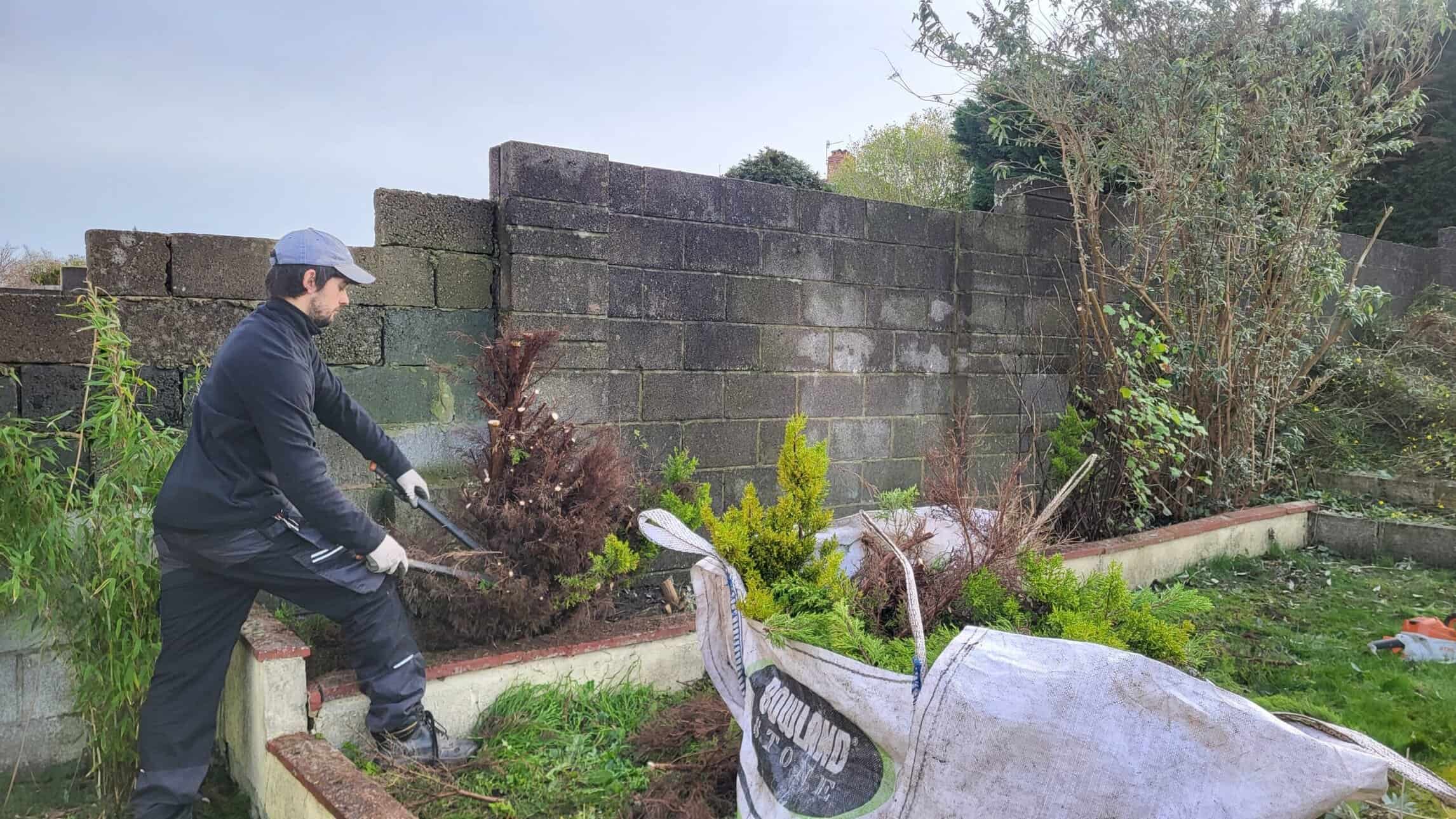
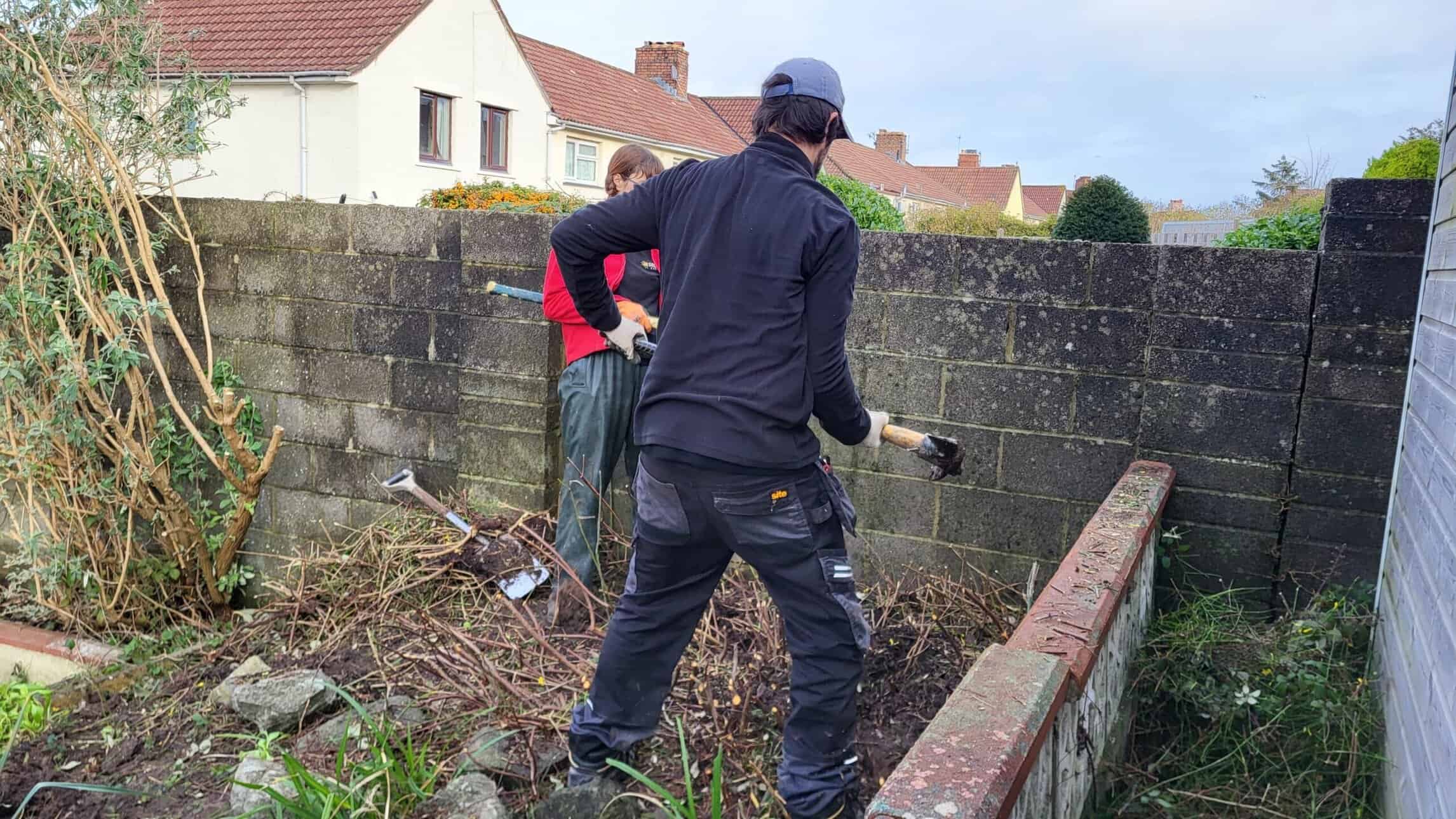
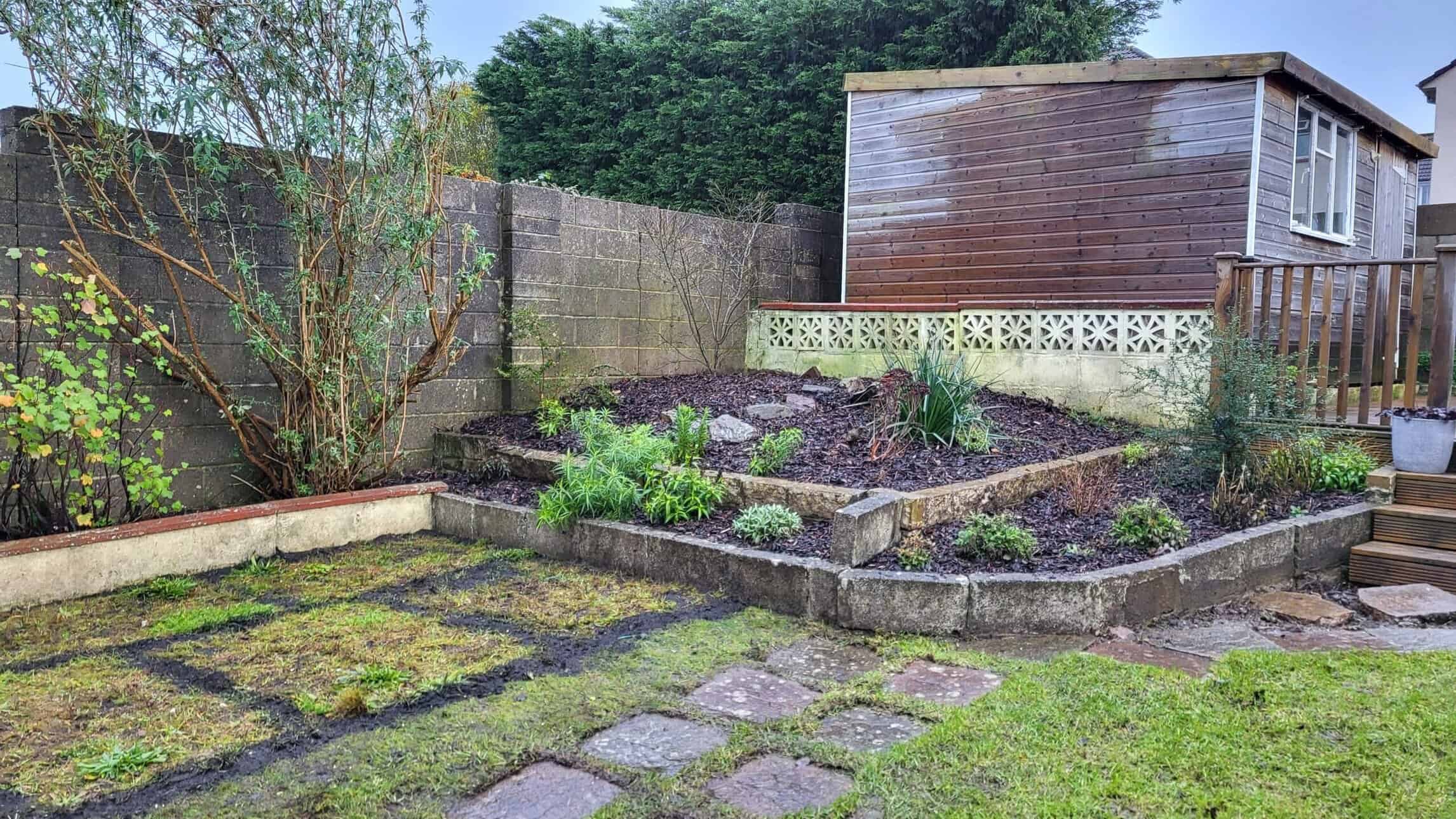
The left hand side of the lawn was raised and mossy, and our customer was keen for us to take a look at it. Along with this the conifers in the left hand border were to be removed to make way for lighter, colourful plants. Flo started by stimming the lawn to tidy it up so that we could get more of a picture of what was happening in the lawn. Ben started lopping off conifer limbs and then worked his way down to remove the stumps.
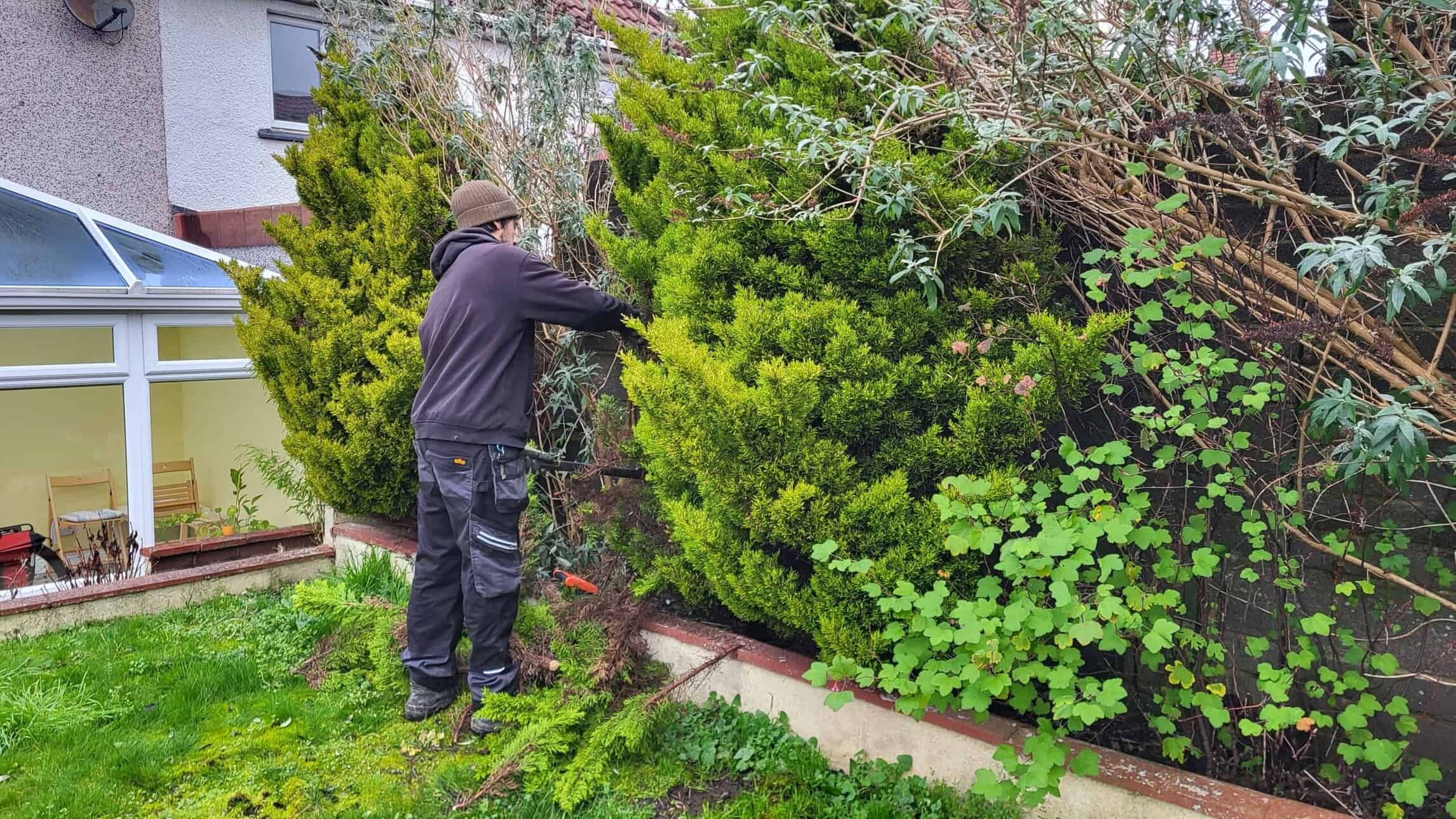
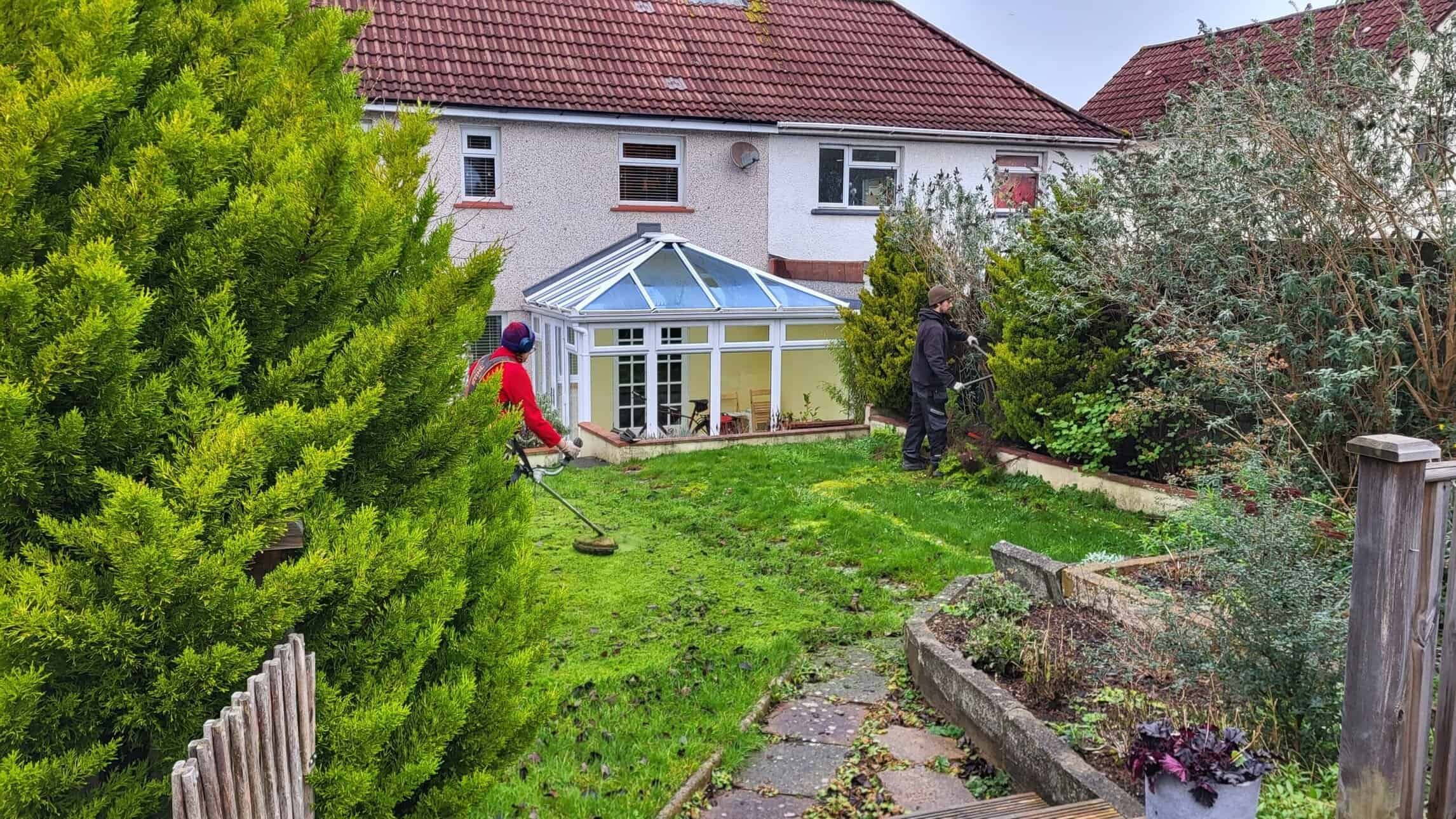
You can see the mossy outline that is growing in the lawn where Ben is standing. We also pruned the Buddleja and Ornamental Raspberry, as well as weeding the rockery area.
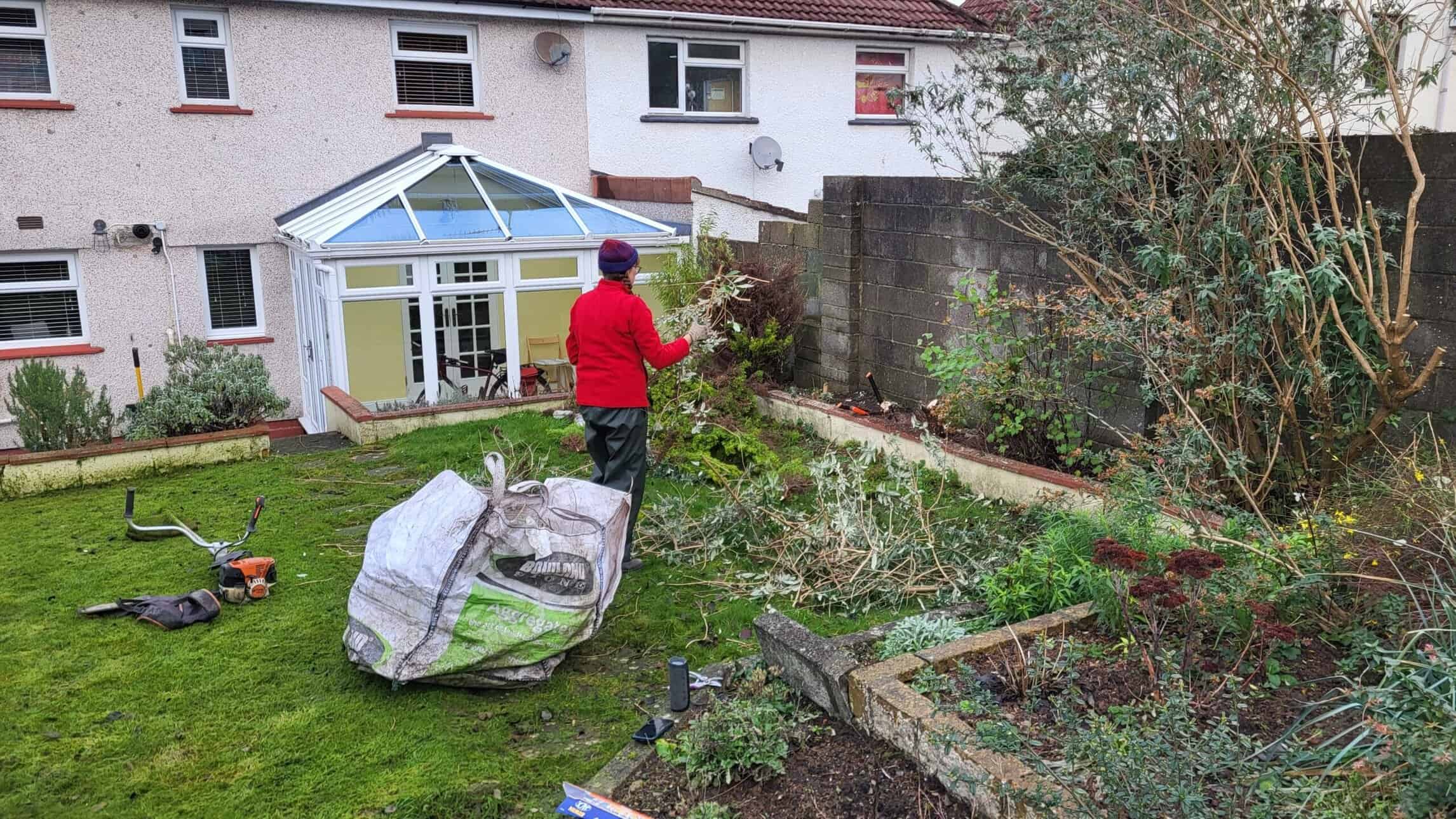
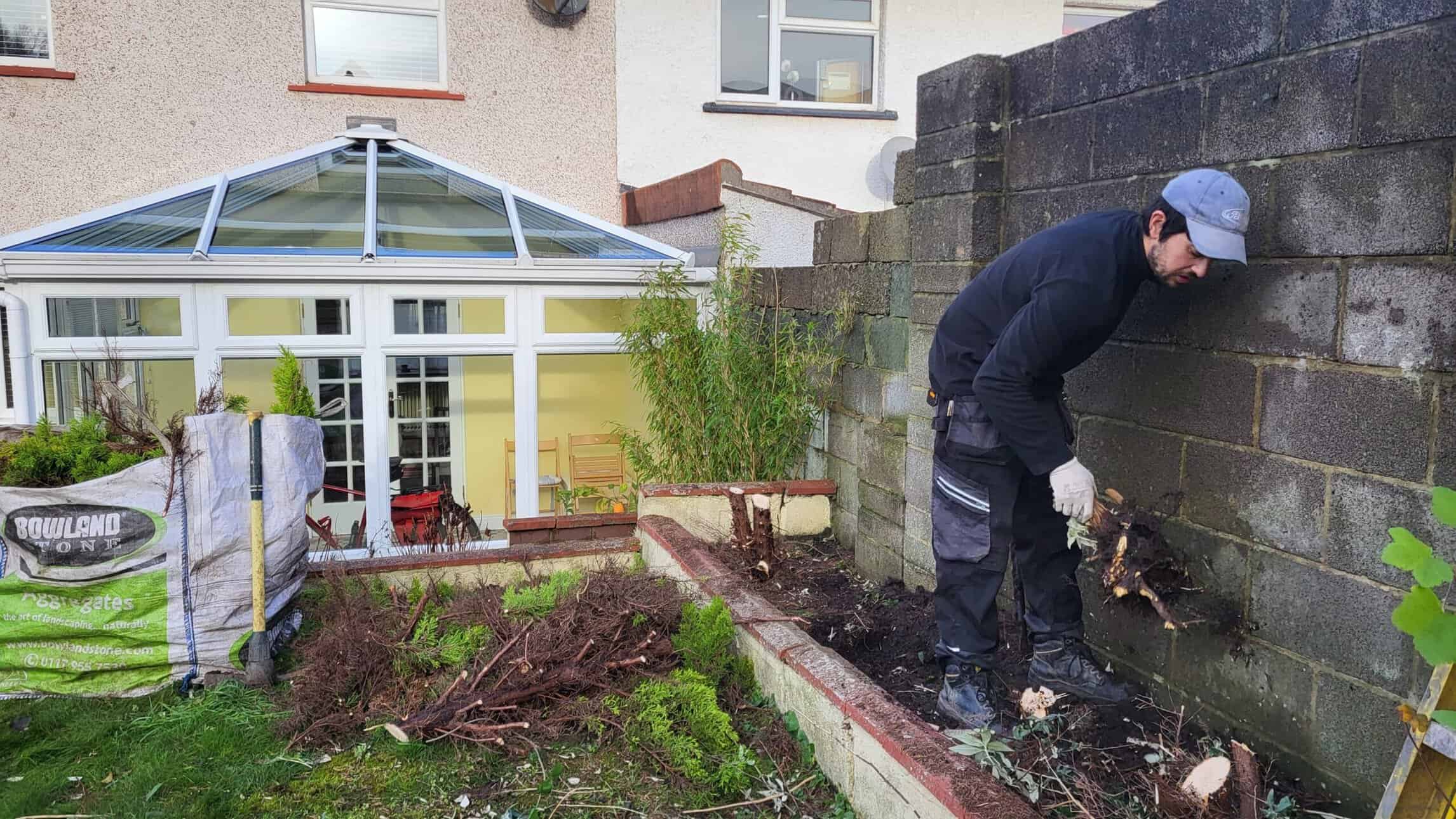
The bamboo was also removed, that was near to the conservatory, with the large borders there being weeded and prepared for mulching.
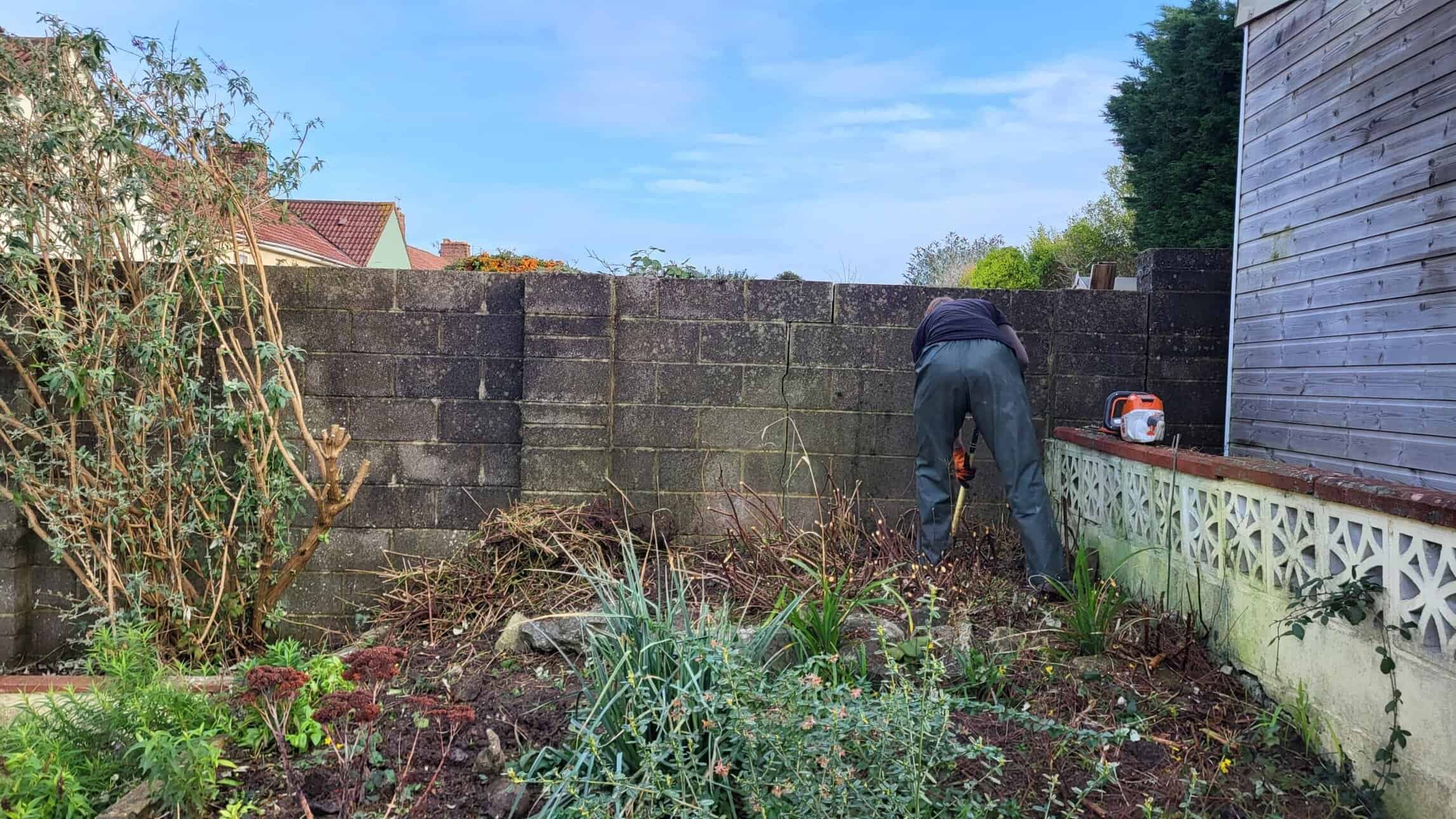
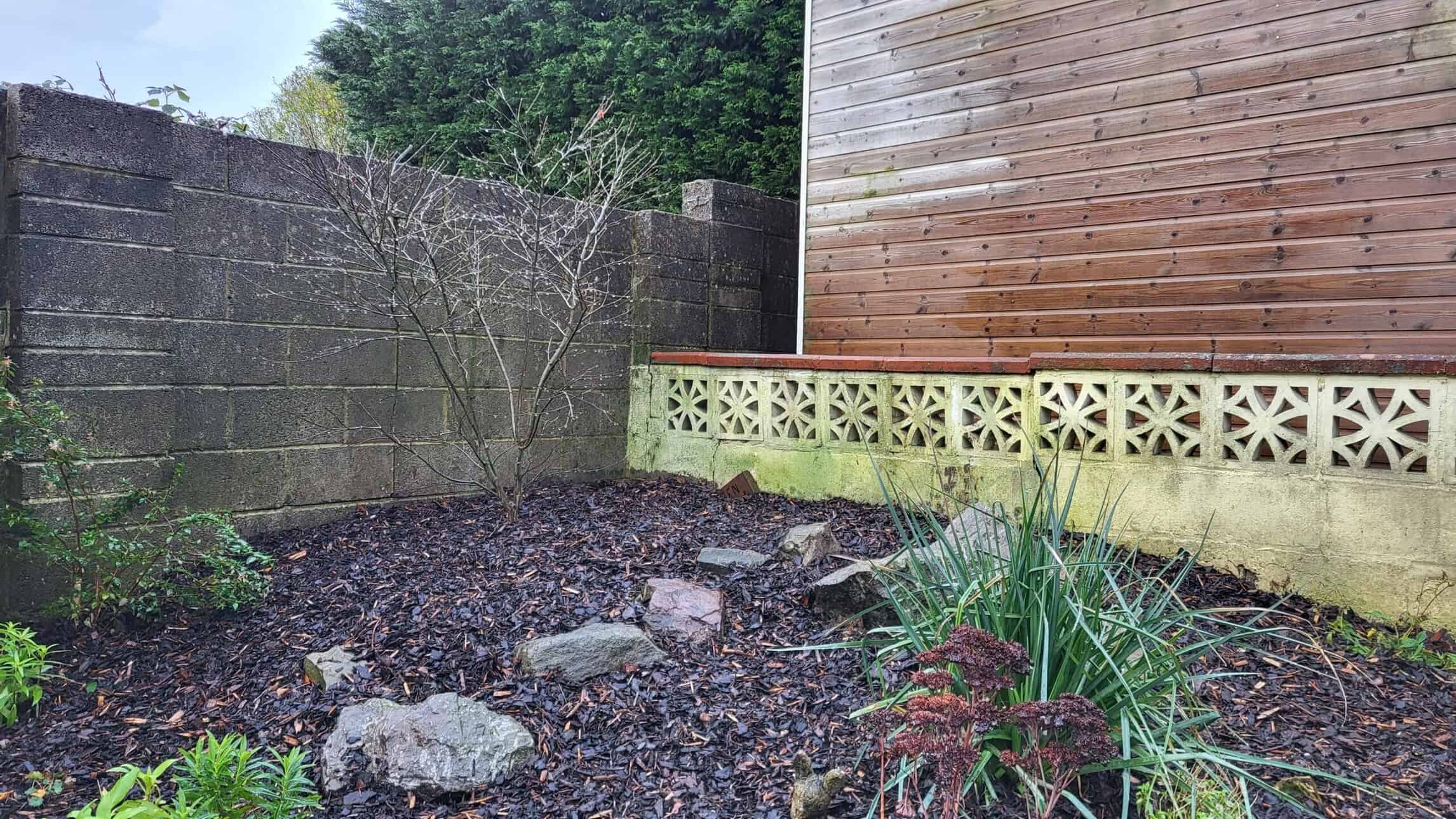
We then set our attention to removing a bramble area at the top of the rockery by the shed. The area was also filled with Jasmine officinalis which had crept it’s way through the border. We used a mattock to go over this area thoroughly so that we would be able to plant a tree.
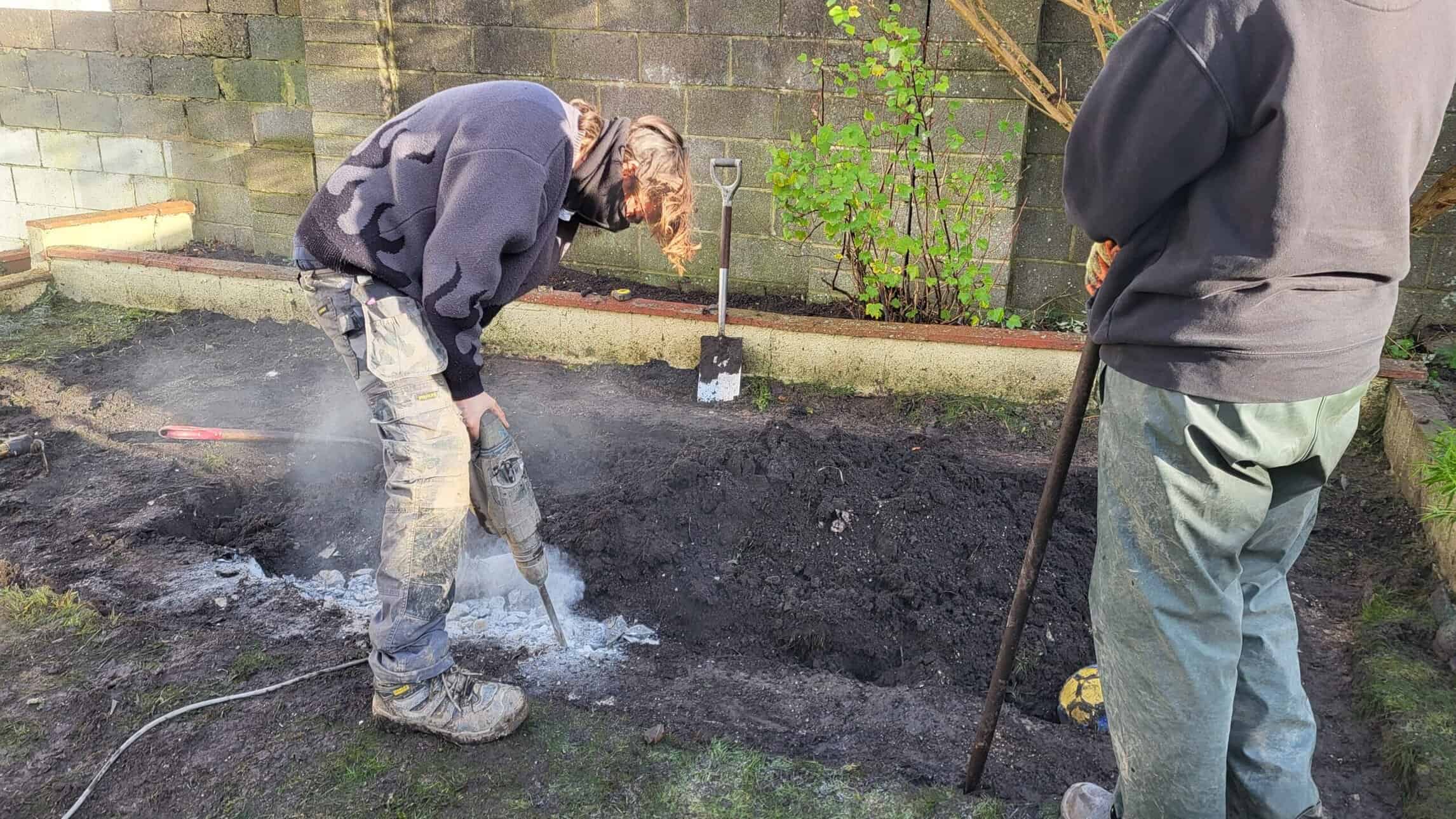
Once we were on top of that zone, we then started to inspect the problematic lawn. Ben started by removing the moss and turf to see what was underneath. He then dug down to see what was going on – it wasn’t just the foundation of an old greenhouse, but appeared to be the top of a bomb shelter from WWII.
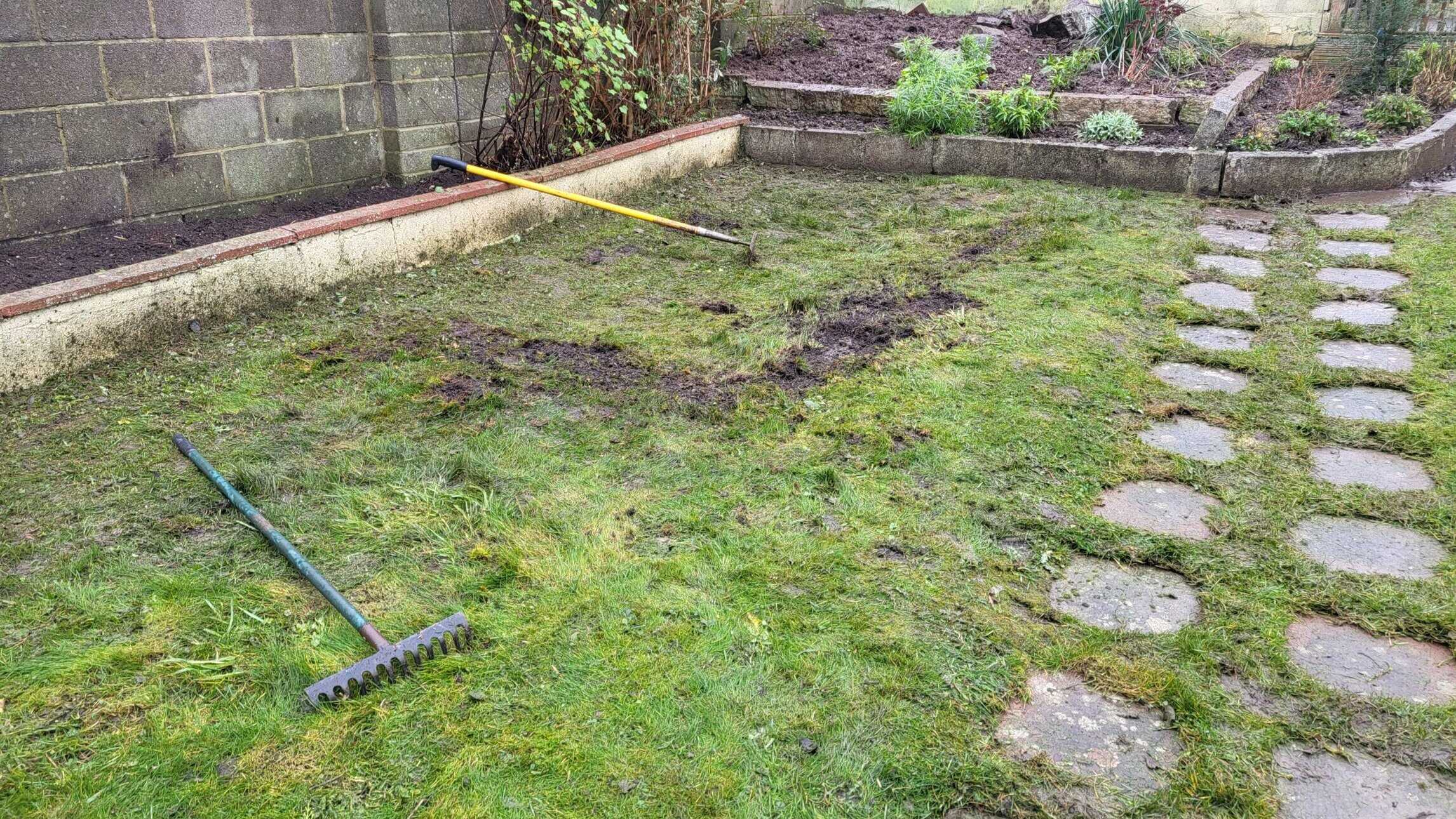
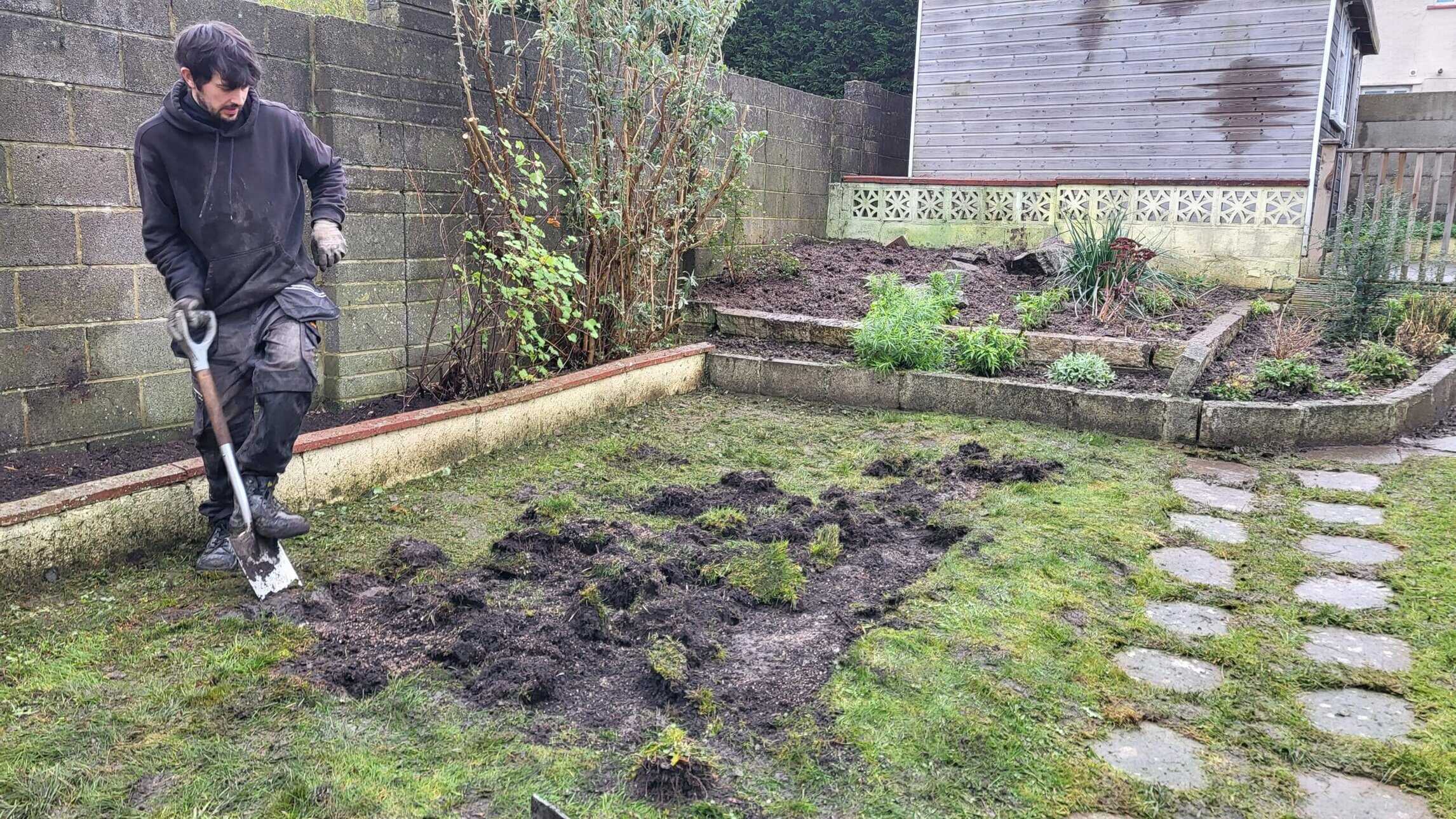
We used an electric breaker to see what state it was in. The reinforced concrete made breaking out very difficult. The decision was made that instead of using up a lot of time and money, we would bank up soil and lay wild flower meadow turf. Which is of course a similar strategy to whomever created the lawn before us.
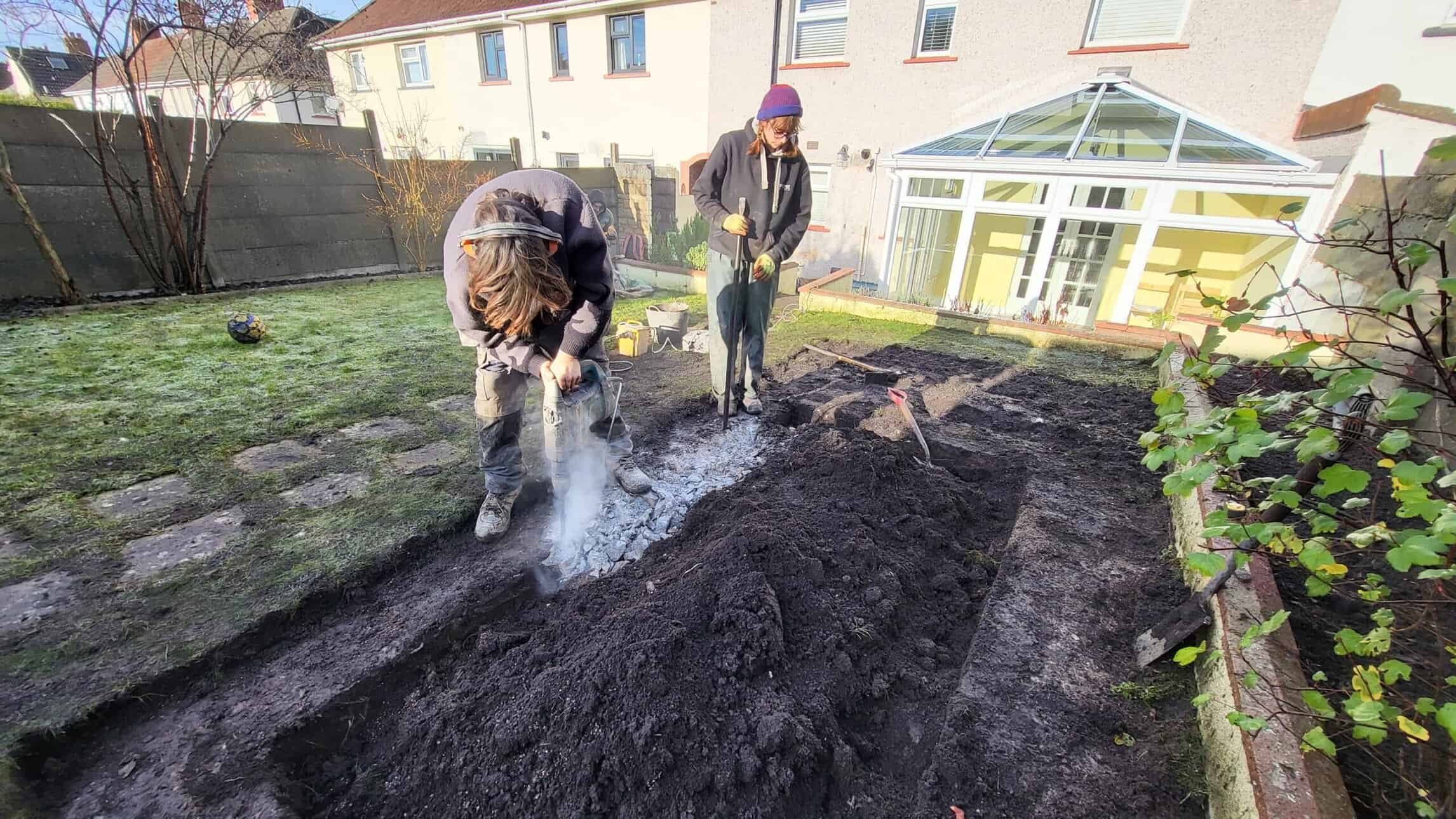
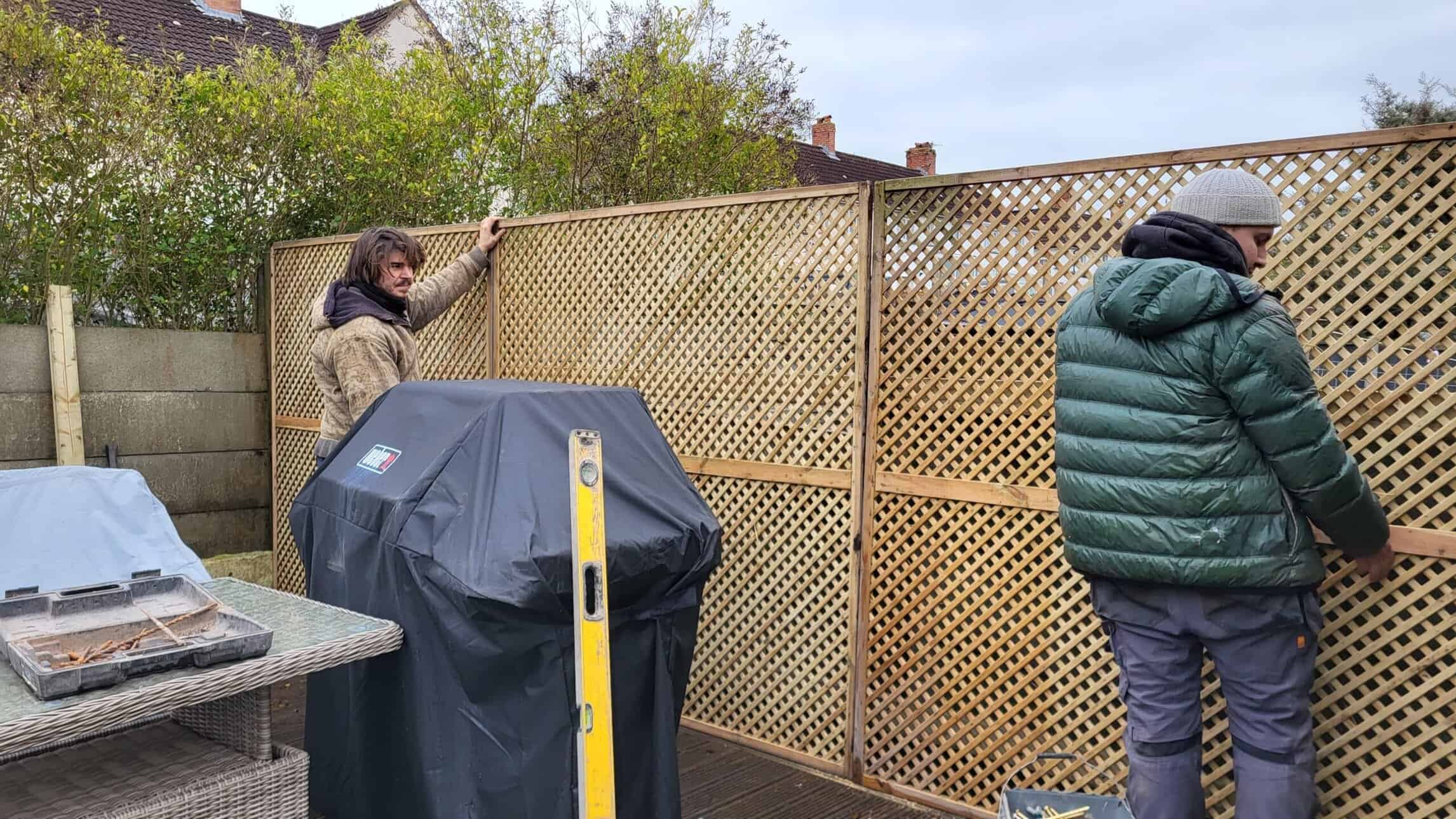
These are the kind of decisions that often have to be made whilst landscaping – you never quite know what you are going to come across under the ground. Whilst soil was being brought in for the lawn, the boys got to work putting up three trellis panels to cover a low, unsightly, concrete fence.
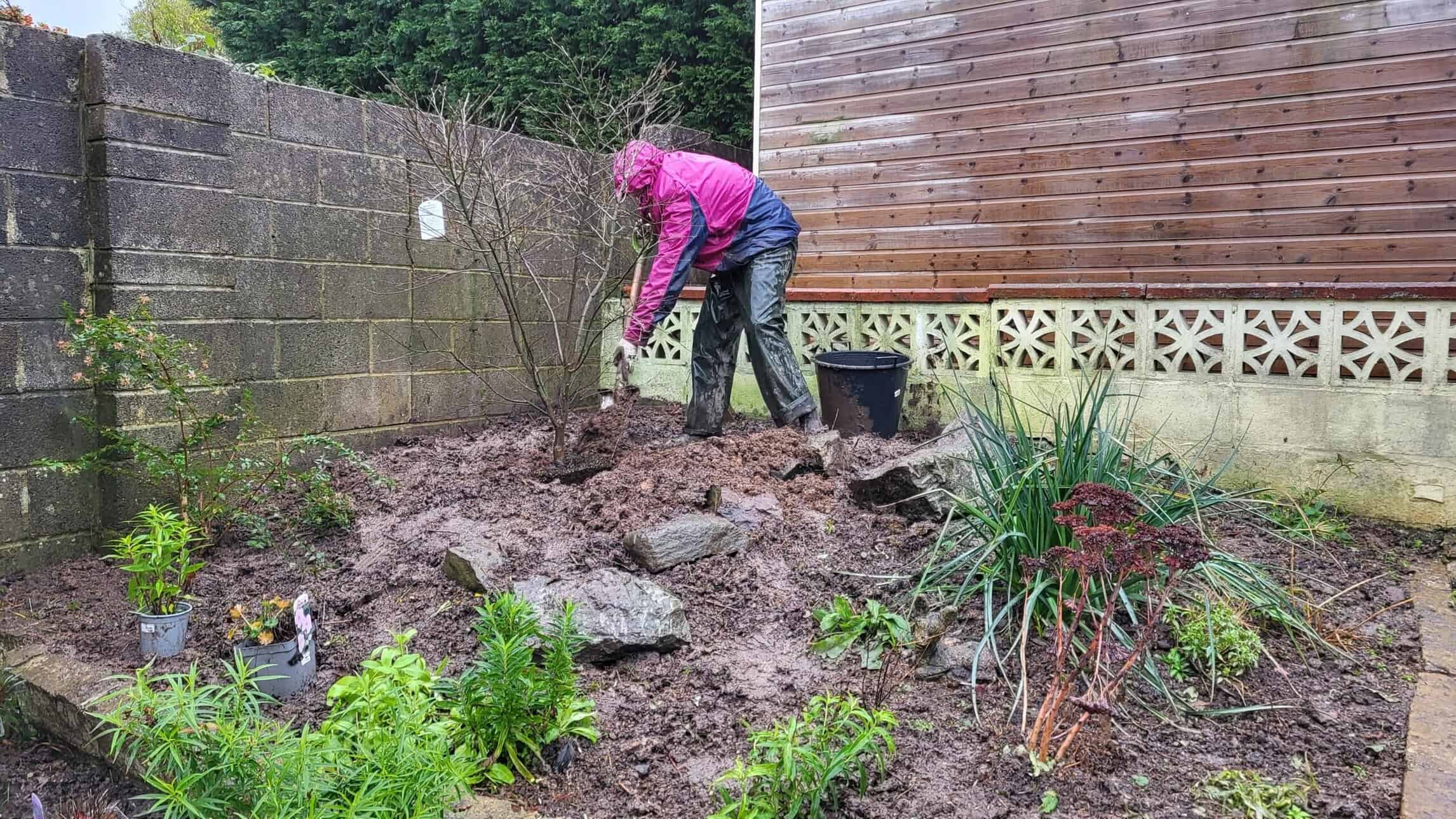
We had made it through most of the week without any rain, but the day of planting came, and with it heavy downpours. Flo and I endeavoured to plant and got very muddy. We did a good clean up job afterwards, in preparation for the mulch that would be brought in the following day.
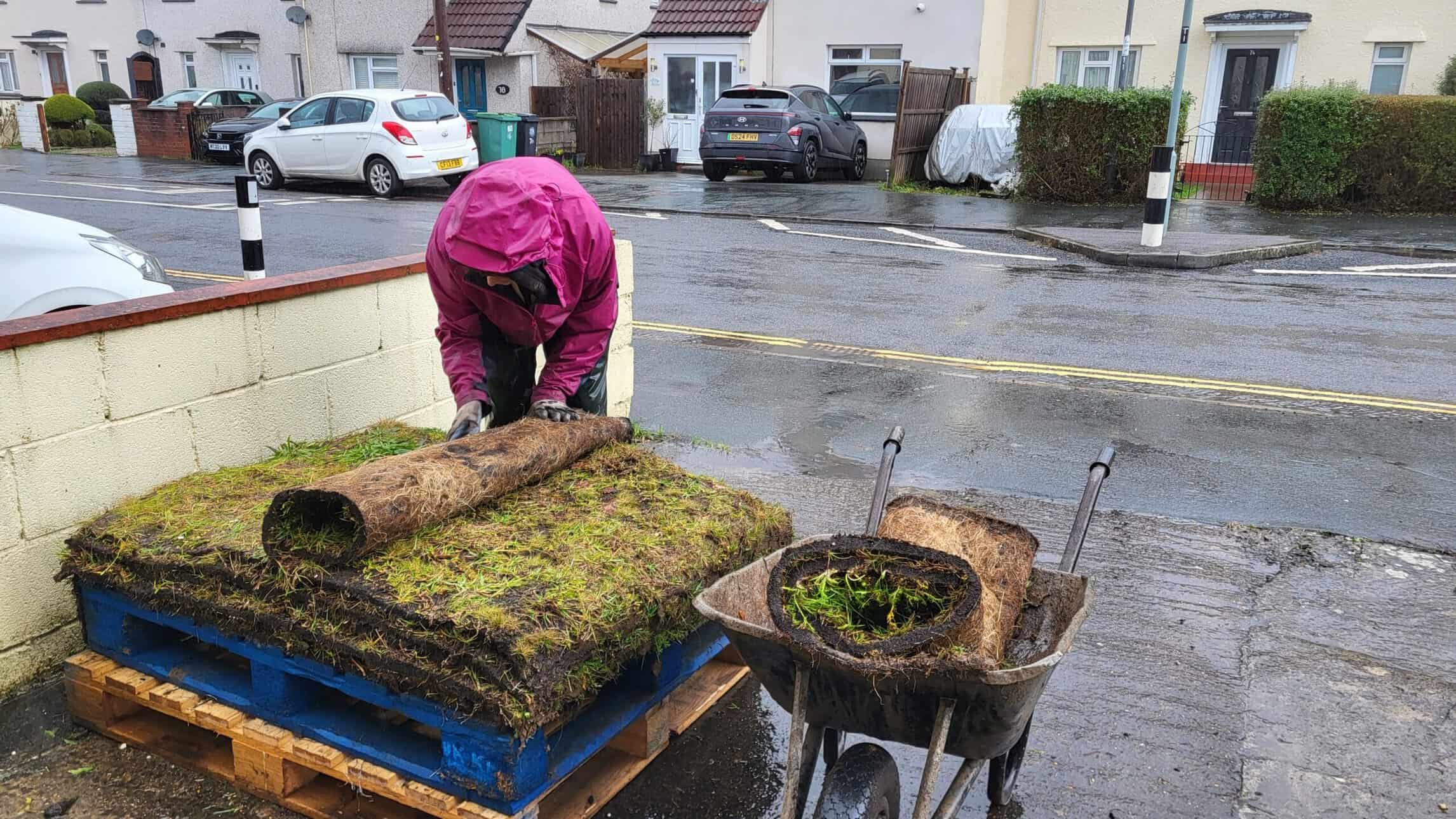
Along with the mulch, we had our delivery of wild flower meadow turf. It is a fantastic product; a metre long mat of established wild flower plants without soil, that once laid onto prepared ground puts down it’s roots very quickly, giving instant effect.
We screeded the soil as we went to make sure it was as flat as possible whilst we laid the turf. We also cut the grass away around the stepping stone pathway, to give it better definition.
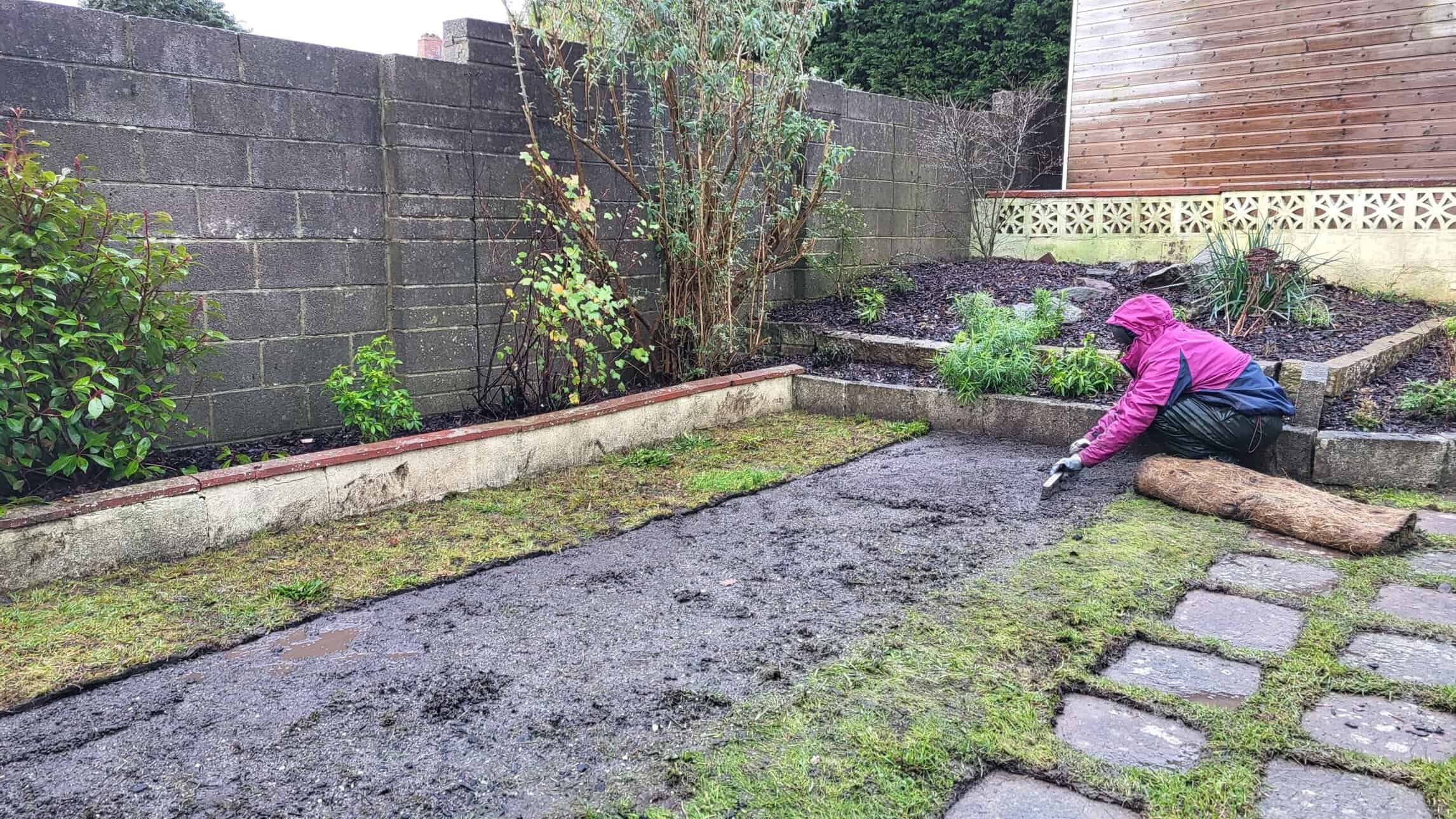
The rain has felt rather biblical over the past couple of weeks, and has barely stopped. It poured down but we got the meadow turf laid, and also included the finishing substrate, which is a compost including wild flower seeds. This is added as a dressing at the end, to fill in any gaps or holes.
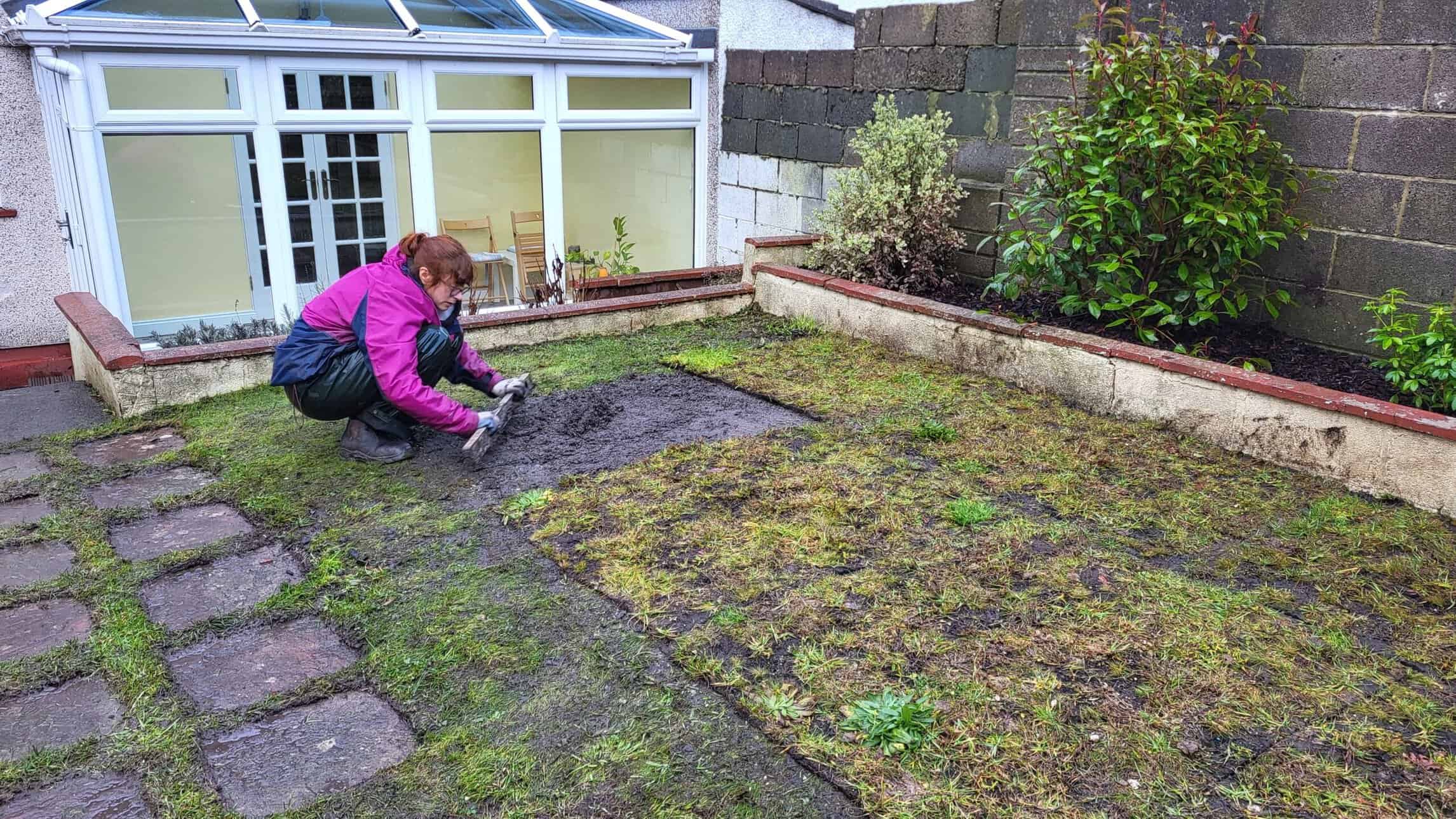
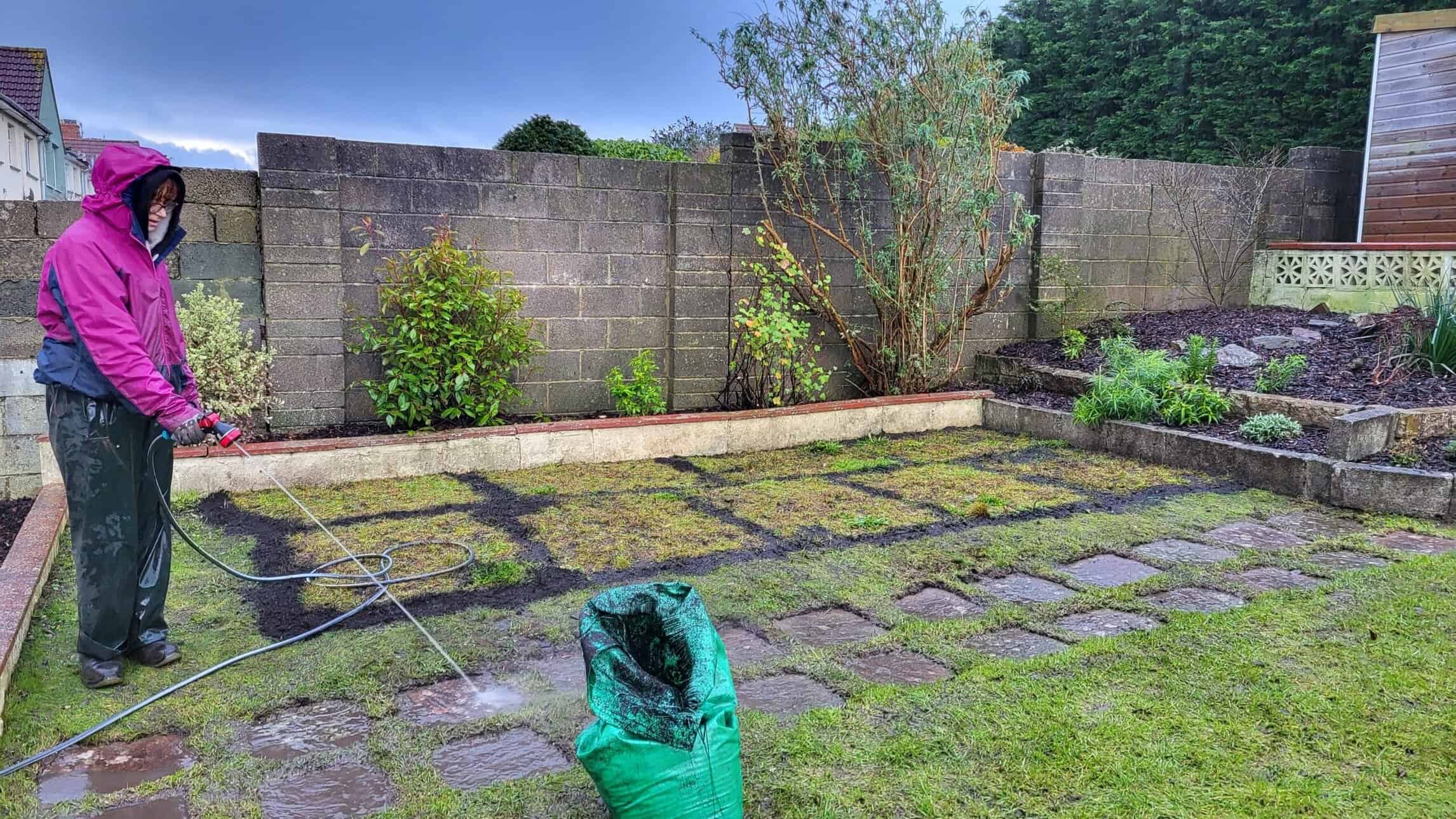
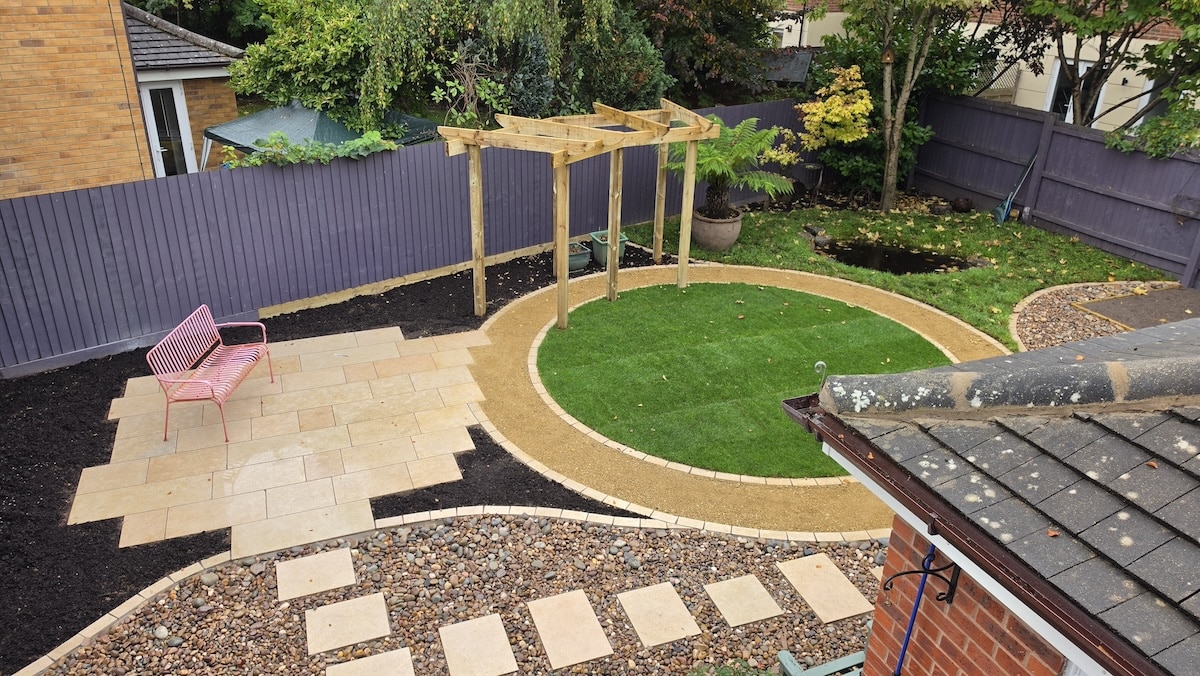
We are so pleased with the transformation of this garden. Just changing a few elements in your garden can make a big impact, and can create a more inviting space that you want to relax in. We hope to get to see this small wild flower meadow flourishing this summer. We used the Low-grow, scented meadow turf, that grows to a maximum of about 40cm in height. This is perfect for smaller gardens that wish to incorporate a meadow for beneficial insects and wildlife.
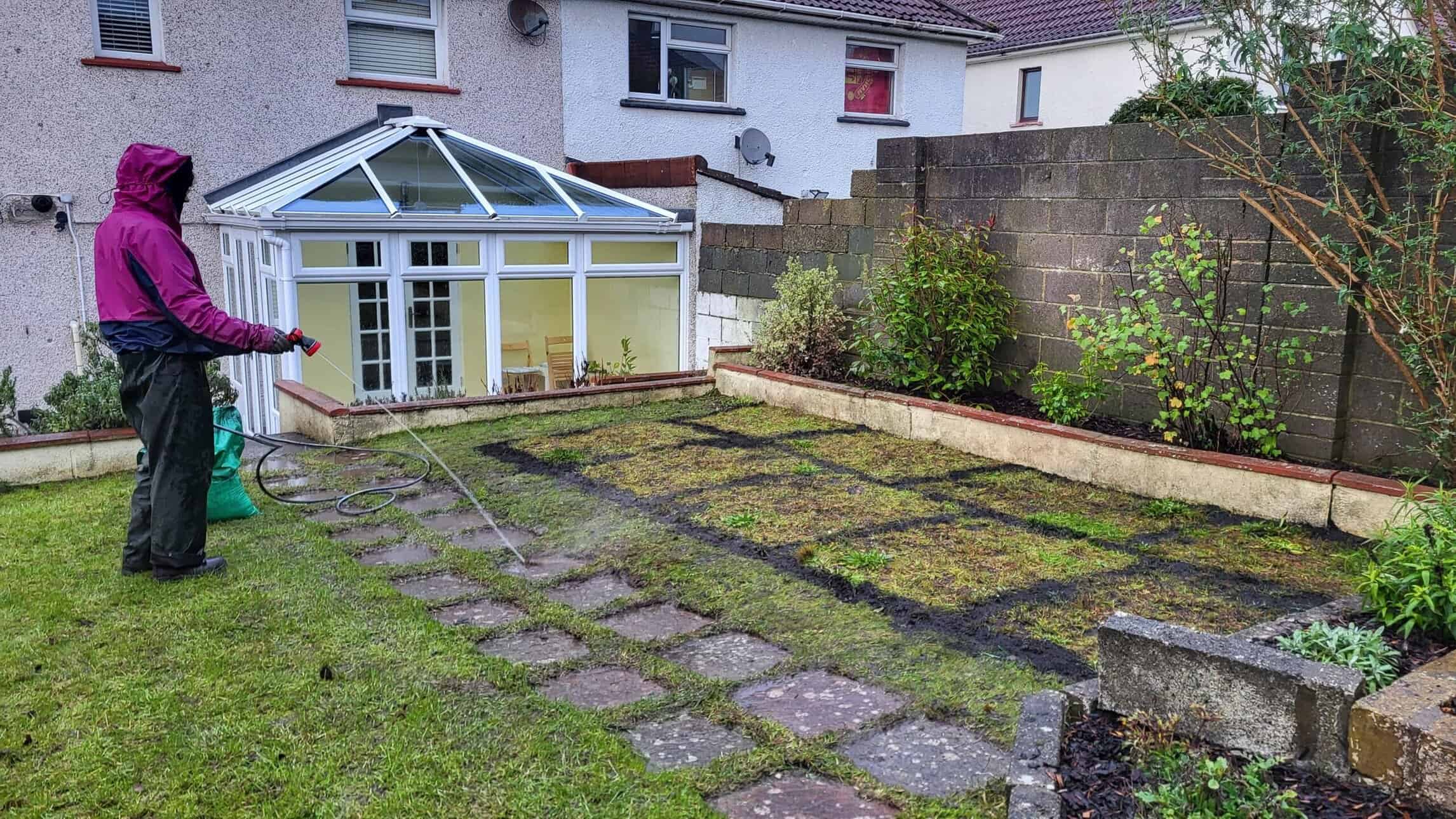
The shrubs that we have planted where the conifers used to be will take up that space well, and will cover the concrete wall. The Acer that has been planted at the top of the rockery is going to be a stand out beauty once her leaves return in the springtime.
We are really pleased with how this garden has turned out, it’s been a good project for January. Check back in with us soon to see what else we are up to…